
Introduction: Why B2B Sales Without Discipline Always Break
Most B2B companies have a sales process.
Very few actually follow it.
On paper, everything looks structured: qualification steps, proposal rules, approval checkpoints, and closing criteria. In reality, sales reps move deals based on instinct. A proposal is sent before discovery is complete. Discounts are promised before approval. Deals jump stages because “this one feels hot.”
Managers usually step in after something goes wrong—when a forecast misses, when a deal stalls, or when a discount blows up margins. By that point, the damage is already done.
This gap between defined process and actual behavior is where most B2B sales problems live. And the longer the sales cycle, the more expensive those gaps become. In long, multi-stakeholder deals, small deviations compound over time until momentum is lost entirely.
That’s why discipline in the B2B sales process cannot rely on reminders, meetings, or manual supervision. Discipline has to be built into the system itself.
This is exactly the role of Zoho CRM Blueprints.
What Are Zoho CRM Blueprints? (In Simple Terms)
Zoho CRM Blueprints are a way to control how deals move through your sales stages, not just visualize them.
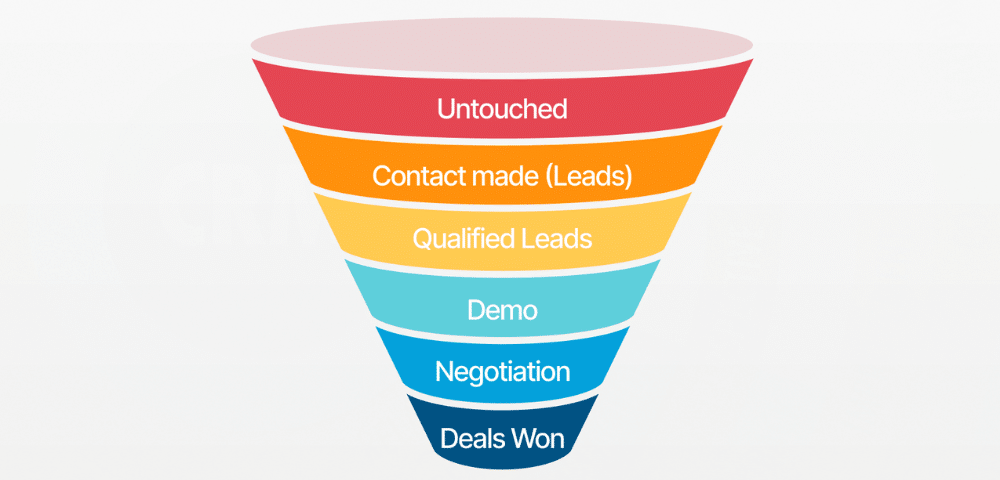
Most CRMs stop at pipelines. A pipeline shows you stages like Qualification, Proposal, Negotiation, and Closed. It tells you where a deal is—but not whether it deserves to be there.
Blueprints go one step further.
They define:
- What must happen before a deal can move forward
- Who is allowed to move it
- What actions are required at each stage
- What approvals must be completed
In other words:
- Pipelines show stages
- Blueprints enforce stages
For B2B teams, this difference is critical. A long sales cycle needs control, not just visibility. Zoho CRM Blueprints turn your best practices into mandatory behavior, embedded directly into daily sales work.
Why B2B Sales Processes Fail Without Enforcement

B2B sales processes usually fail for one simple reason: they are optional.
When reps are under pressure to close, process discipline is often the first thing sacrificed. Over time, this creates a pattern of inconsistent behavior that no amount of reporting can fix.
Deals skip key stages. Proposals are sent without proper qualification. Pricing discussions happen before value is established. Legal reviews start too late. Each shortcut feels small in the moment, but together they create stalled deals, inaccurate forecasts, and unpleasant surprises for leadership.
Without enforcement, the sales process becomes a suggestion rather than a system.
This leads to:
- Forecasting that looks good until it suddenly doesn’t
- Deals that stall with no clear reason
- Managers chasing updates instead of managing outcomes
- Revenue volatility that feels “unexpected” but isn’t
Zoho CRM Blueprints exist specifically to eliminate this gap between intention and execution.
How Zoho CRM Blueprints Enforce Sales Discipline
Blueprints don’t rely on memory or motivation. They rely on rules.
They sit between sales stages and control how a deal moves forward. This enforcement happens in three powerful ways.
Mandatory Actions Before Moving Deals
With Blueprints, a deal cannot move to the next stage unless specific conditions are met.
That can include:
- Required fields being filled
- Tasks being completed
- Documents being uploaded
- Approvals being granted
For example, a deal cannot move from Discovery to Proposal unless key qualification details are captured. This ensures proposals are never sent blindly.
This turns discipline from a managerial responsibility into a system rule.
Role-Based Control
Not everyone should be able to do everything in a B2B deal. Blueprints respect that.
Sales reps, managers, finance, and leadership each have defined permissions. A rep may initiate a discount request, but cannot approve it. A manager may approve pricing, but not bypass legal review.
This prevents bottlenecks while protecting the business from risky shortcuts.
Guided Selling for Sales Reps
One of the most underrated benefits of Blueprints is guidance.
Instead of guessing what comes next, reps see exactly:
- What action is required
- Why it matters
- What must be completed before progressing
This is especially valuable for onboarding new reps and standardizing behavior across growing teams.
Blueprints don’t slow sales teams down—they remove uncertainty.
Using Blueprints in Long B2B Sales Cycles
Long sales cycles are where discipline matters most.
In deals that last months, silence is dangerous. A deal that hasn’t moved in weeks might still be alive—or it might be quietly dying. Without system enforcement, these stalled deals remain invisible until it’s too late.
Blueprints help prevent this by enforcing momentum.
For example:
- A deal cannot remain in Proposal without scheduled follow-ups
- Negotiation stages require documented objections or approvals
- Closing requires all dependencies to be completed
This ensures that deals are always either progressing or clearly flagged as blocked.
For any company managing CRM for long sales cycles, Blueprints act as guardrails that keep deals moving—or expose exactly why they’re not.
Real-World B2B Use Cases for Zoho CRM Blueprints
Blueprints are not theoretical. They solve very real, very common B2B problems.
Enterprise Sales Approvals
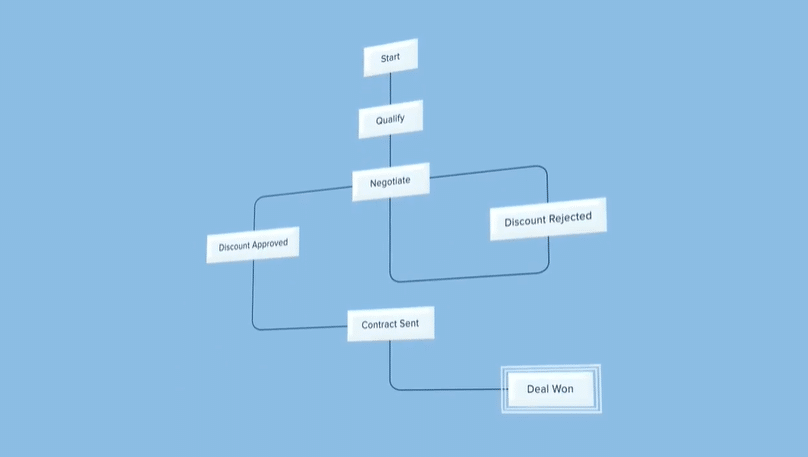
In enterprise deals, discounting and special terms are unavoidable. The problem is when they happen informally.
Blueprints enforce:
- Discount request submission
- Approval chains
- Documentation before pricing changes
This protects margins while keeping deals moving.
Pre-Sales & Technical Validation
Many B2B deals stall because technical validation happens too late—or not at all.
Blueprints can require:
- Demo completion
- Technical sign-off
- Pre-sales confirmation
before a deal advances. This prevents last-minute technical objections that derail negotiations.
Contract & Legal Review
Nothing kills momentum like a surprise legal issue at the end.
Blueprints ensure:
- Contracts are reviewed at the right stage
- Legal dependencies are visible
- Deals don’t reach “Closing” prematurely
This reduces stress for sales, legal, and leadership alike.
Common Mistakes When Using Blueprints

Blueprints are powerful—but only when implemented thoughtfully.
One common mistake is over-restricting sales reps. If every small action requires approval, the system feels heavy and adoption suffers. Discipline should protect the process, not suffocate it.
Another mistake is building Blueprints without clearly defined workflows. Automation cannot fix unclear processes. If the sales process itself isn’t well understood, Blueprints will only enforce confusion.
Training is also critical. Blueprints change how people work. Without proper onboarding, reps may see them as obstacles instead of support.
Finally, some teams treat Blueprints as “automation” rather than process enforcement. Their real value is consistency, not speed alone.
Blueprints vs Manual Sales Management
Manual sales management relies on:
- Chasing updates
- Reviewing deals after they stall
- Enforcing rules verbally
- Correcting mistakes late
Blueprint-driven management replaces this with:
- System-enforced discipline
- Predictable deal movement
- Early visibility into problems
- Scalable control as teams grow
For sales leaders and CEOs, this shift is transformational. Control moves from individuals to the system, without losing flexibility.
How Blueprints Fit Into a Complete B2B CRM System
Blueprints are not a standalone feature. They work best as part of a complete CRM ecosystem that includes:
- Structured pipelines
- Automated follow-ups
- Reporting and forecasting
- Role-based access
- Account-level visibility
To see how Blueprints connect with the full sales framework, read:
Zoho CRM for B2B Sales: The Complete Guide to Managing Long Sales Cycles
FAQs: Zoho CRM Blueprints & B2B Sales
What are Zoho CRM Blueprints used for?
Zoho CRM Blueprints are used to enforce sales processes by controlling how deals move between stages, ensuring required actions and approvals are completed before progression.
Are Blueprints suitable for B2B sales teams?
Yes. Blueprints are especially effective for B2B teams with long, complex sales cycles involving multiple stakeholders and approvals.
Can Blueprints enforce approvals in Zoho CRM?
Yes. Blueprints can require approvals from managers, finance, or leadership before deals advance, ensuring compliance and control.
Do Blueprints slow down sales teams?
No. When designed correctly, Blueprints remove uncertainty and rework, helping sales teams move faster with confidence.
Can Blueprints be customized per pipeline?
Yes. Blueprints can be customized for different pipelines, deal types, or sales motions within the same CRM.
Ready to Turn Your B2B Sales Process Into a System?
If your sales process depends on reminders, emails, and follow-ups from managers, discipline will always be inconsistent.
Zoho CRM Blueprints help B2B teams enforce sales stages, approvals, and actions—automatically and consistently.
Talk to a Zoho CRM expert and see how Blueprints can bring structure to your B2B sales process.