Real estate sales are not simple transactions. They involve multiple lead sources, long follow-up cycles, brokers working in parallel, unit availability that changes daily, and negotiations that depend heavily on timing and information accuracy. Yet many real estate companies still rely on spreadsheets, WhatsApp chats, and generic CRMs that were never designed for this level of complexity.
This is where Zoho CRM for real estate stands out.
Rather than acting as a basic contact database, Zoho CRM—when implemented correctly—becomes a full operating system for real estate sales. It helps developers and broker teams control leads, manage units, track broker performance, and give management real-time visibility into what is actually happening on the ground.
This guide explains how Zoho CRM works for real estate companies, why generic CRMs fail in this industry, and how developers and broker teams can use Zoho CRM to build a more predictable, controlled sales operation.
What Is Zoho CRM for Real Estate?
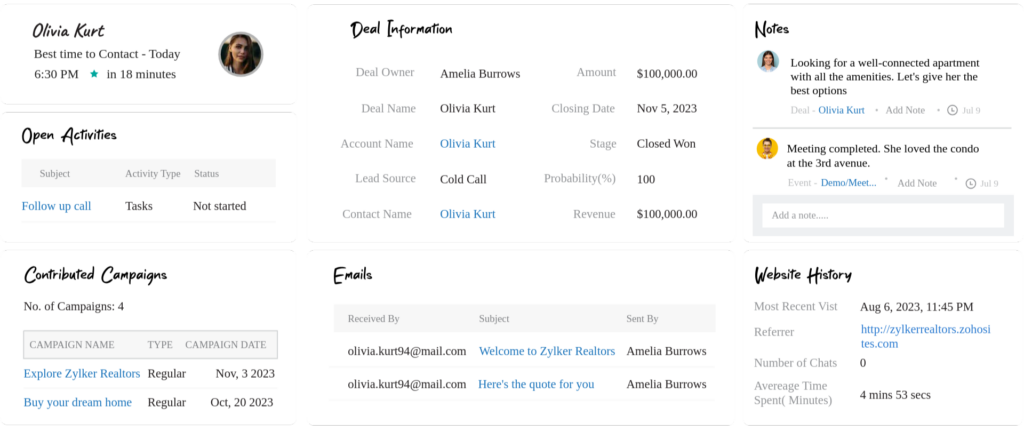
Zoho CRM is a flexible customer relationship management platform that can be adapted to different industries. For real estate companies, this adaptability is critical.
Unlike generic CRM usage—where everything is treated as a “lead” or “deal”—Zoho CRM for real estate is structured around the way property sales actually work. That includes:
- Leads coming from portals, calls, WhatsApp, and walk-ins
- Multiple brokers handling opportunities simultaneously
- Units with availability, reservation status, and payment plans
- Long follow-up cycles and delayed decision-making
- Commissions and performance tracking per broker
When Zoho CRM is configured for real estate, units are not just notes, brokers are not just users, and follow-ups are not dependent on memory. Everything is tracked, automated, and visible to the right people.
This makes Zoho CRM suitable for:
- Real estate developers managing multiple projects
- Brokerage companies handling high lead volumes
- Hybrid teams with in-house sales and external brokers
Who This Guide Is For
This guide is written for three main roles inside real estate organizations:
Real Estate Developers and CEOs

Decision-makers who need:
- Reliable sales numbers
- Project-level performance visibility
- Reduced dependency on individual brokers
- Predictable revenue forecasting
Sales Managers and Heads of Brokers
Operators who need:
- Controlled lead distribution
- Broker accountability
- Clear activity tracking
- Commission transparency
Brokers and Agents

Daily users who need:
- Fast access to leads
- WhatsApp-first communication
- Automated reminders
- Less administrative work
Zoho CRM delivers value to each of these roles differently—without forcing everyone to work the same way.
Why Real Estate Companies Lose Leads (And Why Most CRMs Fail)
One of the biggest challenges in real estate sales is lead leakage. This doesn’t always mean leads are lost completely, it often means they are delayed, forgotten, or handled too late.
Common causes include:
- Leads coming from multiple sources with no central system
- Random or manual lead distribution
- Brokers following leads differently
- No clear SLA for first contact
- WhatsApp conversations happening outside the CRM
- Management only seeing results at the end of the month
Generic CRMs struggle here because they are built for simple pipelines. They do not understand brokers, units, reservations, or payment plans. As a result, companies end up customizing endlessly—or abandoning the system altogether.
Zoho CRM, when structured specifically for real estate, addresses these issues at the process level, not just the feature level.
Core Capabilities of Zoho CRM for Real Estate
Instead of listing dozens of features, it’s more effective to understand Zoho CRM through four core capabilities that matter most in real estate sales.
1. Lead and Broker Control
In real estate, speed and fairness in lead handling directly affect revenue.
Zoho CRM enables:
- Automatic lead capture from portals, websites, calls, and campaigns
- Smart lead distribution based on location, unit type, or broker workload
- Clear ownership for every lead
- Full visibility into broker activities and follow-ups
Each broker works from a single dashboard where calls, meetings, WhatsApp messages, and follow-ups are tracked automatically. Sales managers can instantly see who is working on which lead—and who is not.
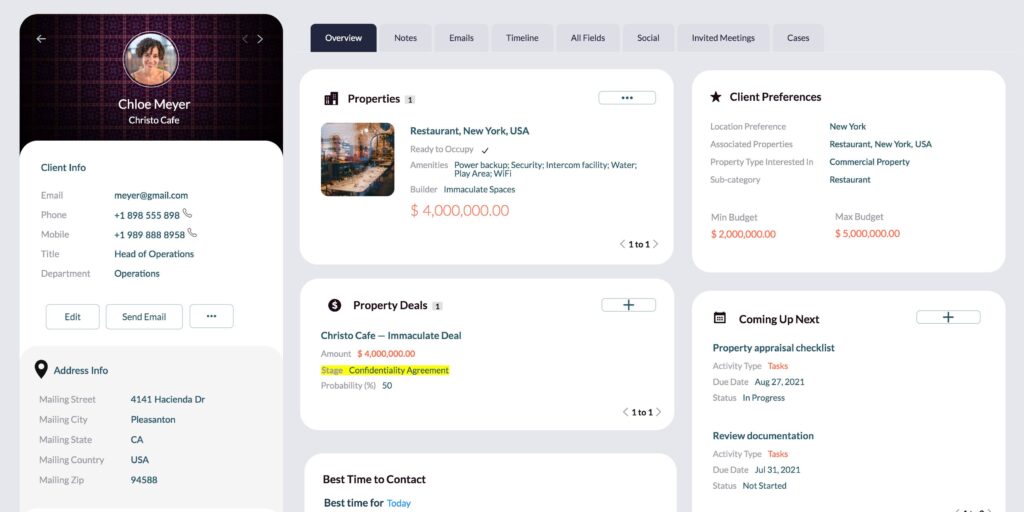
This removes dependency on individual discipline and replaces it with a controlled system where no lead is ignored or forgotten.
2. Inventory, Units, and Deals

Most CRMs treat properties as notes or attachments. Zoho CRM does not.
With the right setup, Zoho CRM allows companies to:
- Register units as structured records
- Track availability in real time
- Filter units by location, type, or project
- Reserve units during negotiation
- Present payment plans clearly during sales conversations
This is a critical differentiator. Brokers no longer rely on outdated spreadsheets or phone calls to check availability. Developers gain confidence that what is being sold reflects actual inventory status.
By managing units inside the CRM, Zoho moves from being a sales tool to becoming a real operational system.
3. Operations, SLAs, and Commissions
Operational discipline is often missing in real estate sales—not because teams don’t care, but because systems don’t enforce it.
Zoho CRM introduces structure through:
- Defined sales stages and SLAs
- Activity tracking for calls and meetings
- Automated follow-up reminders
- Commission calculation logic
Commissions are calculated based on clear rules, reducing disputes and misunderstandings. Sales managers can focus on coaching and performance improvement instead of chasing updates.
This capability is especially valuable for growing real estate teams where manual control simply does not scale.
4. Management and Real-Time Visibility

One of the biggest frustrations for developers and CEOs is delayed visibility.
Zoho CRM solves this through:
- Role-based dashboards
- Separate views for brokers, managers, and developers
- Real-time performance reports
- Live pipeline and forecasting
Instead of waiting for manual reports at month-end, management can see the real picture at any time. Decisions are based on actual data, not assumptions.
This visibility also reduces dependency on individuals and creates a more resilient sales organization.
Using WhatsApp with Zoho CRM in the Egyptian Real Estate Market
In Egypt, WhatsApp is not optional—it is the primary communication channel for real estate sales.
Zoho CRM integrates WhatsApp into the sales process by:
- Logging conversations inside the CRM
- Linking messages to leads and deals
- Using templates for professional follow-ups
- Maintaining communication history even if brokers change
This is a major advantage for any real estate CRM in Egypt, where informal communication often leads to lost context and missed opportunities.
By bringing WhatsApp into Zoho CRM, companies maintain control without changing how brokers naturally communicate with clients.
Zoho CRM vs Generic CRMs for Real Estate Teams
The difference between Zoho CRM and generic CRMs is not branding—it is logic.
Generic CRMs:
- Treat all businesses the same
- Focus on contacts and deals only
- Require heavy customization for real estate
Zoho CRM for real estate:
- Understands brokers as a core element
- Treats units and inventory as first-class records
- Supports payment plans and reservations
- Provides role-based visibility
For developers and broker teams, this difference directly affects adoption, accuracy, and long-term value.
Common Mistakes When Implementing CRM in Real Estate

Even powerful systems can fail if implemented incorrectly. Common mistakes include:
- Treating CRM as a database instead of a process
- Ignoring real estate-specific logic
- Not defining sales stages clearly
- Failing to train brokers properly
- Expecting adoption without enforcement
Successful Zoho CRM implementations start with process design—not features—and focus on adoption as much as configuration.
FAQs: Zoho CRM for Real Estate
Is Zoho CRM suitable for real estate companies in Egypt?
Yes. Zoho CRM supports Arabic interfaces, local workflows, and WhatsApp-based communication, making it suitable for the Egyptian market.
Can Zoho CRM handle both developers and brokers?
Yes. Zoho CRM supports different roles and dashboards, allowing developers, managers, and brokers to work within the same system without confusion.
Does Zoho CRM support payment plans?
Yes. Payment plans can be configured and linked to units and deals, helping brokers present options clearly during negotiations.
Can Zoho CRM integrate with WhatsApp?
Yes. WhatsApp integration allows conversations to be tracked inside the CRM, improving follow-ups and accountability.
How long does Zoho CRM implementation take for real estate companies?
Implementation timelines vary based on complexity, but most real estate setups take between a few weeks to a few months when done properly.
Do I need a Zoho CRM implementation partner?
While Zoho CRM is flexible, working with a partner like PyramidBITS experienced in real estate setups helps avoid common mistakes and ensures long-term success.
Turning Real Estate Sales into a Controlled System

Real estate sales will always involve people, timing, and negotiation. But chaos does not have to be part of the process.
With the right structure, Zoho CRM for real estate helps developers and broker teams move from reactive selling to controlled, data-driven operations. Leads are handled fairly, brokers are accountable, inventory is accurate, and management finally has visibility it can trust.
For real estate companies looking to scale without losing control, Zoho CRM is not just a tool—it is the foundation of a more disciplined sales organization.
If your business depends on brokers, units, and long sales cycles, the system behind your sales matters more than ever.
Ready to Organize Your Real Estate Sales Process?
If you’re a real estate developer or brokerage struggling with lost leads, unstructured broker follow-ups, or unclear sales visibility, Zoho CRM can help you bring control back into your sales operation.
At PyramidBITS, we implement Zoho CRM specifically for real estate companies — aligning the system with how developers, sales managers, and brokers actually work.
👉 Talk to our team to see how Zoho CRM can be structured around your projects, units, and sales teams.