Accounting software has become a critical business tool for Egyptian SMEs that want to move beyond Excel, reduce manual accounting work, and gain better financial visibility. As businesses grow, managing invoices, expenses, tax records, bank reconciliation, approvals, and reports through spreadsheets becomes harder to control and easier to get wrong.
For many SMEs in Egypt, accounting still depends on a mix of Excel sheets, manual journal entries, disconnected POS systems, paper receipts, and reports prepared at the end of the month. This setup may work for a small business at the beginning, but it quickly becomes risky when transaction volume increases, tax requirements become more demanding, and business owners need faster access to accurate numbers.
Choosing the right accounting software is not just about replacing Excel. It is about building a financial system that helps the business track every transaction, understand cash flow, stay organized, and make decisions based on live data instead of delayed reports.
This is why many businesses start comparing local accounting tools, ERP accounting modules, and cloud accounting software such as Zoho Books. Each option has its place, but for Egyptian SMEs that need flexibility, automation, visibility, and scalability, Zoho Books is a strong fit.
Why Egyptian SMEs Need Better Accounting Software
SMEs are often under pressure to grow while keeping operations lean. Business owners want to know where the money is going, finance managers need accurate reports, and accountants need tools that reduce repetitive manual work.
The challenge is that many financial processes remain fragmented.
Sales may be recorded in one place, expenses in another, bank transactions in a third system, and tax reports prepared manually. When data is scattered, the accounting team spends too much time collecting and validating information instead of analyzing it.
A proper accounting software system helps SMEs centralize financial operations and reduce the operational risks that come with manual processes.
This becomes especially important when the business needs to manage:
- Customer invoices
- Supplier bills
- Expense tracking
- Bank reconciliation
- Tax reports
- Approval cycles
- Cash flow visibility
- Financial statements
Without a structured system, every month-end closing becomes a pressure point. Numbers take longer to prepare, errors are harder to detect, and business owners may not receive the financial clarity they need in time.
Excel vs Local Tools vs ERP vs Cloud Accounting Software
When Egyptian SMEs start looking for the best accounting software for SMEs, they usually compare four main options: Excel, local accounting tools, ERP accounting modules, and cloud accounting software. Each option has advantages and limitations.
Excel
Excel is flexible, familiar, and easy to start with. Many accountants are comfortable using it for calculations, tracking, and reporting. However, Excel depends heavily on manual updates. As the business grows, files multiply, formulas break, and version control becomes difficult.
Excel can support accounting work, but it should not become the main accounting system for a growing business.
Local Accounting Tools
Local tools may offer basic invoicing, tax support, and accounting workflows adapted to the Egyptian market. They can be useful for small businesses with simple requirements. However, many local tools may become limited when the company needs deeper automation, integrations, dashboards, or multi-department workflows.
ERP Accounting Modules
ERP systems can provide strong accounting capabilities, especially for larger organizations with complex inventory, manufacturing, or operations. The challenge is that ERP implementation can be more expensive and time-consuming than what many SMEs need at an early stage.
For businesses that are not ready for full ERP, a lighter cloud accounting system may be more practical.
Cloud Accounting Software
Cloud accounting software allows businesses to manage accounting online, access financial data from anywhere, and connect accounting with other business tools. Zoho Books is a cloud-based platform that supports invoicing, expenses, banking, inventory, reports, and automation in one system.
For many Egyptian SMEs, this balance between functionality, scalability, and ease of implementation makes cloud accounting a strong middle ground.
What to Look for in an Accounting System Egypt SMEs Can Trust
Choosing an accounting system Egypt businesses can rely on requires more than checking whether it can issue invoices. The system should support daily accounting operations while giving management visibility into the financial health of the business.
A strong system should help with:
Accurate Financial Records
The first requirement is accuracy. Every invoice, bill, payment, expense, and journal entry should be recorded properly and easy to review.
Automation
Accounting teams should not waste time repeating the same manual steps every month. Workflow automation, recurring invoices, automatic reminders, and approval cycles can reduce administrative work and improve consistency.
Reconciliation
Bank and credit card reconciliation is one of the most important accounting tasks. A good system should help match transactions, identify discrepancies, and close books faster.
Reporting
Business owners and finance managers need reports that are clear, updated, and easy to understand. This includes profit and loss statements, balance sheets, cash flow reports, tax summaries, and customized reports.
Scalability
The system should support the business as it grows. More users, more transactions, more branches, more products, and more reporting needs should not force the company to start over with a new tool.
Why Zoho Books Egypt Is a Strong Fit for SMEs
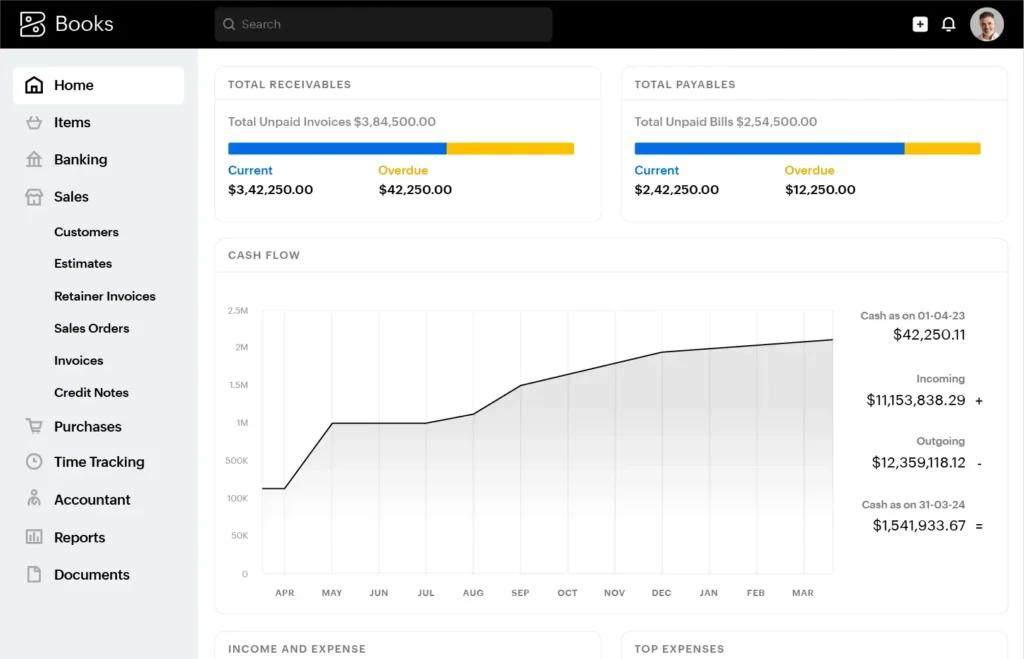
Zoho Books Egypt is a strong choice for SMEs because it gives businesses a structured accounting system without forcing them into a heavy ERP implementation from day one.
Zoho Books supports the core financial operations most SMEs need, including invoicing, bills, expenses, bank reconciliation, inventory, financial reports, and workflow automation. Zoho describes Books as cloud accounting software for managing end-to-end accounting, from invoicing to inventory and expenses.
For Egyptian SMEs, the value is not only in the features. The value is in how these features work together.
Instead of managing invoices in one file, expenses in another, and reports manually, Zoho Books helps finance teams connect financial activity inside one system. This reduces duplicate work, improves visibility, and helps decision-makers access accurate numbers faster.
It is especially useful for companies that want to move from manual accounting toward a more controlled financial workflow without overcomplicating daily operations.
Key Zoho Books Features for Egyptian SMEs
Zoho Books covers several areas that are highly relevant for SMEs in Egypt.
Invoicing and Bills
Businesses can create invoices, manage customer payments, track supplier bills, and keep records organized. This helps finance teams reduce manual invoice tracking and improve payment follow-up.
Expenses and Purchases
Zoho Books allows businesses to record expenses, categorize them, and connect them to financial reports. For growing companies, this improves cost visibility and makes it easier to understand where money is being spent.
Bank Reconciliation
Manual reconciliation is one of the biggest time drains for accountants. Zoho Books supports reconciliation workflows that help match bank transactions with accounting records and identify differences faster.
Financial Reports
Zoho Books provides financial statements and reports that help business owners understand profitability, cash flow, outstanding payments, and overall financial performance.
Automation and Approval Workflows
Finance teams can automate recurring tasks, reminders, and approval flows. This reduces the need for manual follow-ups and helps maintain financial control.
Inventory and Integrations
For businesses that sell products, inventory tracking can connect accounting with stock movement. Zoho Books can also integrate with other Zoho apps and third-party systems, making it part of a broader business operations setup.
How Zoho Books Helps Business Owners Make Better Decisions
Many SME owners only see financial reports after the month closes. By then, problems may already be too late to fix.
A modern accounting software system gives business owners faster visibility into financial performance. Instead of waiting for manual reports, they can monitor revenue, expenses, cash flow, receivables, and payables more frequently. This matters because business decisions depend on numbers.
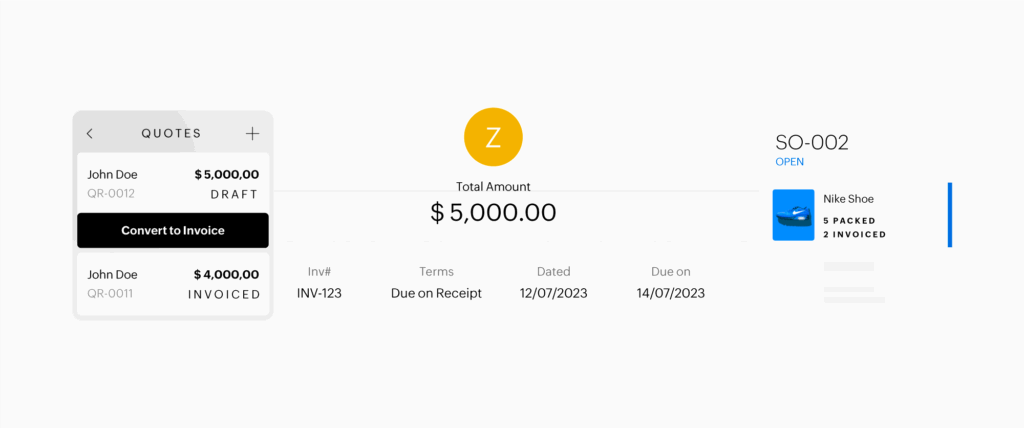
A business owner may need to know:
- Which customers have overdue payments?
- Are expenses increasing faster than revenue?
- Is cash flow enough to cover upcoming commitments?
- Which products or services are most profitable?
- How much is owed to suppliers?
When this information is delayed, decisions become reactive. When it is available in a structured accounting system, decision-making becomes more confident.
Zoho Books helps turn accounting from a monthly reporting task into a live management tool.
How Zoho Books Supports Finance Managers and Accountants
For finance managers and accountants, the value of Zoho Books is in reducing repetitive work and improving control.
Accountants often spend significant time preparing invoices, matching transactions, collecting approvals, reviewing expenses, and creating reports. When these tasks are handled manually, the finance team becomes overloaded as the business grows.
Zoho Books helps by giving finance teams a more structured way to manage daily accounting operations.
It supports:
- Organized transaction records
- Faster reconciliation
- Recurring invoices
- Approval workflows
- Clear audit trails
- Custom reports
- Role-based access
This creates a stronger internal control environment. Team members can work inside the same system while maintaining accountability over who created, edited, approved, or reviewed financial records.
For SMEs, this level of control is important because it helps the business grow without losing financial discipline.
Why Cloud Accounting Software Is Better for Growing SMEs
Cloud accounting software is especially useful for growing SMEs because it supports access, collaboration, and scalability.
Unlike desktop-based systems, cloud platforms allow authorized users to access financial data from different locations. This is useful for business owners, accountants, finance managers, and external consultants who need to collaborate without constantly sending files back and forth.
Cloud accounting also reduces the risk of relying on one device or one local file. Financial data is stored in a centralized online system with access permissions and security controls.
For companies with multiple branches, remote teams, or external accountants, this makes operations easier to manage.
The biggest advantage is scalability. As transaction volume increases, a cloud accounting system can grow with the business instead of forcing the company to rebuild its accounting workflow later.
Common Mistakes SMEs Make When Choosing Accounting Software
Many SMEs choose accounting tools based only on price or familiarity. While cost matters, choosing the wrong system can create long-term problems.
Common mistakes include:
Choosing a Tool That Only Solves Today’s Problem
A system may work for current transaction volume but fail when the business grows. SMEs should choose software that can scale.
Ignoring Integration Needs
Accounting does not operate alone. It connects with sales, inventory, expenses, payroll, e-commerce, and reporting. If the system cannot integrate, manual work continues.
Depending Too Much on Excel
Excel can still be useful for analysis, but it should not be the main system of record for financial operations.
Delaying Automation
Many businesses wait until accounting becomes chaotic before automating workflows. It is better to build structure before errors and delays become normal.
Not Training the Team Properly
Even strong accounting software fails if the team does not know how to use it correctly. Implementation and training are just as important as choosing the platform.
Why PyramidBITS Helps SMEs Implement Zoho Books the Right Way
Choosing Zoho Books is only the first step. The real value comes from setting it up correctly around the company’s accounting workflow.
PyramidBITS helps Egyptian SMEs implement Zoho Books in a way that fits their business model, reporting needs, and operational structure.
This includes:
- Accounting workflow assessment
- Chart of accounts setup
- Invoice and bill configuration
- Approval workflow setup
- Reporting customization
- Automation planning
- User training
- Ongoing support
The goal is not just to install software. The goal is to build an accounting workflow that reduces manual work, improves visibility, and supports business growth.
FAQs About Accounting Software for Egyptian SMEs
What is the best accounting software for SMEs?
The best accounting software for SMEs depends on business size, transaction volume, reporting needs, and integration requirements. For many SMEs, Zoho Books is a strong option because it combines invoicing, expenses, reconciliation, reporting, and automation in one cloud-based system.
Is Zoho Books suitable for Egyptian SMEs?
Yes. Zoho Books Egypt is suitable for SMEs that want to move away from Excel and manage accounting through a structured cloud accounting software platform.
Can Zoho Books replace Excel?
Zoho Books can replace Excel as the main accounting system of record. Excel may still be used for custom analysis, but daily accounting operations are better managed inside a dedicated accounting system.
What is cloud accounting software?
Cloud accounting software is an online accounting platform that allows businesses to manage financial records, invoices, expenses, reports, and reconciliation from anywhere with secure access.
Does Zoho Books support financial reporting?
Yes. Zoho Books provides financial reports such as profit and loss, balance sheet, cash flow, receivables, payables, and customized reports.
Is Zoho Books better than ERP accounting for SMEs?
For many SMEs, Zoho Books is easier and faster to implement than a full ERP system. ERP accounting may be better for larger companies with complex operations, while Zoho Books is a strong fit for growing SMEs that need structured accounting without heavy implementation.
Conclusion
Choosing the right accounting software is one of the most important financial decisions an Egyptian SME can make. The right system helps the business reduce manual work, improve financial accuracy, track cash flow, and make better decisions based on real data.
Excel may be useful at the beginning, and local tools may support basic accounting needs. But as a business grows, cloud accounting software becomes more valuable because it offers better visibility, automation, collaboration, and scalability.
Zoho Books is a strong fit for Egyptian SMEs that want a practical accounting system without jumping directly into a heavy ERP implementation. It gives business owners and finance managers the tools they need to manage invoices, expenses, reconciliation, reporting, and workflows in one connected platform.
For companies ready to move beyond manual accounting, Zoho Books provides a clear next step toward financial control and operational efficiency.
Ready to Automate Your Accounting Workflow?
If your accounting team is still relying on Excel, manual reconciliation, and disconnected financial reports, it may be time to move to a more structured system.
Zoho Books helps Egyptian SMEs automate invoicing, track expenses, reconcile accounts, improve reporting, and manage accounting workflows with better control.
Book a free Zoho Books demo and see how your accounting workflow can be automated.