Introduction
Odoo ERP is an all-in-one business management software that helps companies manage sales, accounting, inventory, CRM, HR, eCommerce, projects, purchasing, manufacturing, and operations through one connected system.
For many Egyptian businesses, growth creates complexity. Sales teams use one tool, accounting teams use another, warehouse teams depend on spreadsheets, and management receives reports late because data is scattered across departments. This works for a while, but as transaction volume increases and operations become more connected, disconnected tools start creating real business problems.
A customer order may affect inventory, invoicing, delivery, accounting, and customer communication. If each department manages its own data separately, the business loses visibility and control. That is exactly the problem ERP systems are designed to solve.
Odoo describes itself as a suite of open-source business apps that covers company needs such as CRM, eCommerce, accounting, inventory, point of sale, and project management, with a value proposition focused on being easy to use and fully integrated.
For companies in Egypt looking for ERP software Egypt options, Odoo ERP is especially attractive because it is modular. Businesses can start with the apps they need today and expand over time as operations grow. This makes it relevant for SMEs, growing companies, retailers, distributors, manufacturers, service providers, and eCommerce businesses.
What Is Odoo ERP?
Odoo ERP is a modular enterprise resource planning system. In simple terms, it is a platform that brings different business departments into one connected environment.
Instead of using separate systems for sales, accounting, inventory, CRM, HR, and eCommerce, a company can use Odoo apps that work together through a shared database.
This means that when a sales order is created, it can connect automatically to inventory, invoicing, accounting, and delivery workflows. When a customer record is updated in CRM, the same customer information can support quotations, invoices, support requests, and future sales activities.
The biggest advantage of Odoo ERP is not only the number of apps it offers. The real value is integration. Each department works with the same business data, reducing duplication, improving reporting, and helping management see what is happening across the company.
For Egyptian businesses that still rely heavily on Excel sheets, WhatsApp updates, manual approvals, and disconnected accounting tools, Odoo ERP can create a more structured way to manage daily operations.
Why Egyptian Businesses Need ERP Software
Many businesses start with simple tools because they are easy to use and quick to set up. A spreadsheet for inventory, accounting software for invoices, WhatsApp for approvals, and separate files for HR may feel enough in the beginning.
The problem appears when the business grows.
More customers mean more orders. More orders mean more stock movement. More stock movement means more purchasing, delivery, invoicing, and reporting. At that point, disconnected systems create delays and errors.
Common problems include:
- Inventory records that do not match actual stock
- Sales teams selling products that are not available
- Finance teams waiting for updated order information
- Management reports prepared manually at month-end
- Customer data duplicated across multiple tools
- Approvals happening through email or WhatsApp without tracking
An ERP system solves these problems by connecting core business functions into one system. For companies comparing ERP software Egypt solutions, the main question should not be “Which software has the most features?” but “Which system can connect our real business workflows?”
How Odoo ERP Works as Business Management Software
Odoo ERP works through applications, or modules, that cover different business functions. Companies can choose the apps they need and connect them into one operational flow.
This makes Odoo suitable as business management software because it does not only manage one department. It connects multiple departments together.
For example, a trading company may start with CRM, Sales, Inventory, and Accounting. A retail business may add Point of Sale and eCommerce. A service company may add Projects, Timesheets, Helpdesk, and HR. A manufacturing company may add Manufacturing, Purchase, Quality, and Maintenance.
The system is flexible because businesses do not need to implement everything at once. They can start with the most important operational pain points, then expand gradually.
This modular structure is one of the reasons Odoo is often considered a strong ERP for SMEs. It gives smaller and growing businesses access to integrated ERP capabilities without forcing them to start with a heavy enterprise setup from day one.
Odoo CRM and Sales: Managing Customers and Revenue
Sales is often one of the first areas businesses want to organize when implementing Odoo ERP.
Odoo CRM helps teams manage leads, opportunities, activities, customer follow-ups, and pipeline stages. Instead of tracking prospects through spreadsheets or personal notes, sales teams can work from a structured pipeline.
Once an opportunity is ready, sales teams can create quotations and sales orders directly inside Odoo. These sales documents can then connect with inventory, invoicing, and accounting.
This creates a smoother flow from lead to revenue.
For example:
- A lead enters the CRM.
- The sales team qualifies the opportunity.
- A quotation is created.
- The customer approves the offer.
- A sales order is confirmed.
- Inventory is updated.
- Delivery is prepared.
- An invoice is generated.
This connected workflow reduces manual handoffs between departments and gives management better visibility into sales performance.
Odoo Accounting: Connecting Finance with Operations
Accounting is one of the most important reasons businesses consider ERP implementation.
When finance operates separately from sales, inventory, purchasing, and operations, reporting becomes slow and reconciliation becomes difficult. Accountants spend time collecting information instead of analyzing performance.
Odoo Accounting helps connect financial records with business activities such as sales orders, invoices, bills, payments, expenses, and bank reconciliation. Odoo’s official app pages position accounting as part of the same integrated ecosystem as CRM, eCommerce, inventory, point of sale, and project management.
For Egyptian businesses, this connection is especially important because finance teams need accurate records, clear reporting, and better control over transactions.
An integrated accounting system helps companies:
- Track customer invoices
- Manage vendor bills
- Monitor payments
- Reconcile bank transactions
- View financial reports
- Connect accounting with sales and inventory
The value is not just faster accounting. It is stronger financial visibility across the company.
Odoo Inventory: Real-Time Stock and Warehouse Control
Inventory is one of the areas where disconnected systems create the most visible problems.
If stock is managed manually, sales teams may not know what is actually available. Warehouses may update files late. Purchasing may order too much or too little. Finance may not see accurate cost and stock movement data.
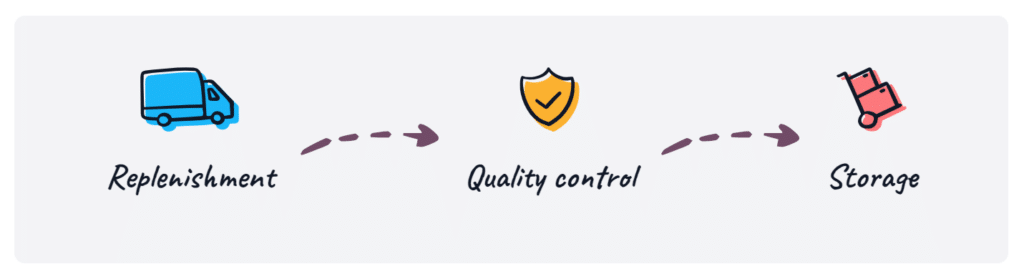
Odoo Inventory helps businesses manage stock movements, warehouses, product locations, lots, serial numbers, and replenishment processes. Odoo’s official inventory page highlights real-time inventory management, warehouse visibility, reservation strategies, cycle counting, and KPIs.
For Egyptian trading, retail, manufacturing, and distribution companies, real-time inventory visibility can directly affect sales, customer satisfaction, and cash flow.
A proper inventory system helps answer questions such as:
- What products are available now?
- Which warehouse has stock?
- Which items are reserved for confirmed orders?
- Which products need replenishment?
- What stock is slow-moving?
- Are inventory records matching reality?
When inventory is connected to sales and accounting, the business gains better control over both operations and financial performance.
Odoo eCommerce and Point of Sale
For businesses selling online or through physical stores, Odoo can connect eCommerce and Point of Sale with inventory and accounting.
This is important because many companies manage online orders separately from store sales and warehouse operations. As a result, stock discrepancies appear, accounting records require manual updates, and customer service teams struggle to access order history.
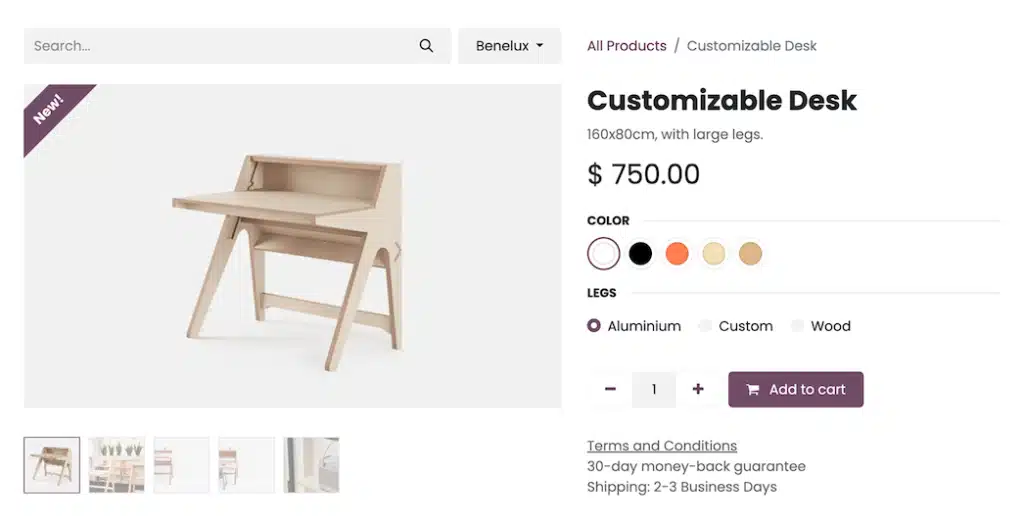
With Odoo eCommerce, businesses can manage online product catalogs, orders, payments, and customer accounts. With Odoo Point of Sale, stores can process sales while keeping stock and accounting connected.
This makes Odoo ERP useful for:
- Retail stores
- eCommerce businesses
- Multi-branch companies
- Distributors with online ordering
- Businesses selling through both online and offline channels
The main advantage is consistency. Whether the order comes from a store, website, or sales team, the transaction can connect to the same inventory and accounting system.
Odoo HR and Employee Management
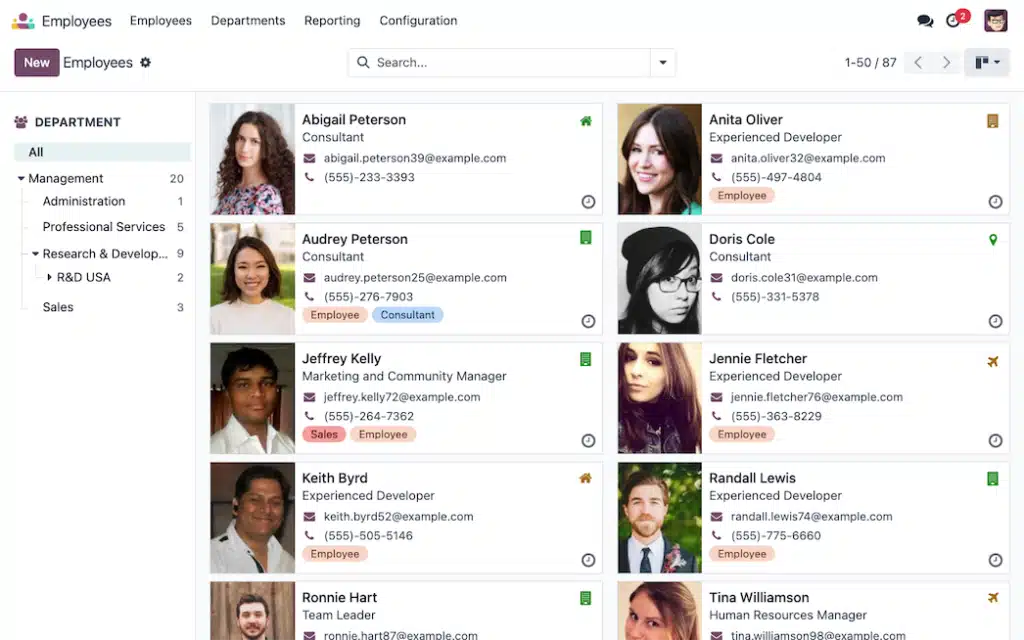
Odoo ERP also includes HR-related apps that help businesses manage employees, attendance, time off, recruitment, appraisals, payroll-related records, and internal processes.
For Egyptian companies, HR operations often become fragmented as the company grows. Recruitment may happen through email, employee records may live in spreadsheets, attendance may come from a biometric device, and payroll may be prepared manually.
Odoo HR apps can help centralize employee information and improve HR visibility.
Depending on the business needs, companies can use Odoo for:
- Employee records
- Time off management
- Attendance
- Recruitment
- Appraisals
- Expenses
- Approvals
For companies looking to connect HR with broader operations, this is useful because employee-related activities can become part of the same business management software environment.
Odoo for SMEs: Why It Fits Growing Businesses
Odoo is often a strong fit for SMEs because it gives them a path toward ERP without forcing them into a large, complex implementation immediately.
Many SMEs in Egypt do not need a full enterprise ERP on day one. They need to fix specific operational problems first: sales tracking, inventory control, accounting visibility, purchasing, or eCommerce.
Odoo allows businesses to start with the most important modules and expand later.
This makes it suitable for companies that want:
- Better visibility without a heavy ERP project
- A system that can grow over time
- One database across departments
- Customizable workflows
- A modular implementation plan
- Integration between sales, inventory, accounting, and operations
For SMEs, the most important advantage is scalability. The business does not need to replace the system every time it grows. Instead, it can add new apps, workflows, users, and reports as operations become more complex.
Odoo Implementation: Why Setup Matters
Choosing Odoo is only the first step. The success of any Odoo implementation depends on how well the system is configured around the company’s real workflows.
ERP implementation is not just software installation.
It requires understanding the business process, mapping departments, defining approvals, setting up products and accounts, configuring workflows, migrating data, training users, and supporting adoption.
A weak implementation can create confusion, even if the software itself is powerful. A strong implementation turns Odoo into a practical operating system for the business.
Important implementation steps include:
- Business process assessment
- Module selection
- Workflow design
- Data migration
- User permissions
- Accounting and inventory configuration
- Custom reports
- Team training
- Post-launch support
For Egyptian businesses, local implementation knowledge is especially valuable because business practices, tax requirements, approval habits, and reporting expectations may differ from global templates.
Common Mistakes Businesses Make with ERP Projects

ERP projects can fail when companies treat them as IT projects only. Odoo ERP works best when it is implemented as a business transformation project, not just a software deployment.
Common mistakes include:
Implementing Too Many Modules at Once
Trying to launch every department at the same time can overwhelm teams. It is often better to start with the highest-impact areas and expand gradually.
Copying Old Processes Without Improvement
If a company simply recreates the same manual process inside ERP, it may not gain much value. Implementation should improve workflows, not just digitize them.
Ignoring User Training
ERP adoption depends on people. If employees do not understand how to use the system, they will return to spreadsheets and manual work.
Underestimating Data Quality
Bad data leads to bad reports. Before migration, product lists, customer records, accounting data, and inventory records should be reviewed and cleaned.
Choosing Software Without a Roadmap
ERP should support the company’s future growth, not only today’s problem. The implementation should be planned with scalability in mind.
How PyramidBITS Helps Egyptian Businesses with Odoo ERP
PyramidBITS helps businesses evaluate, plan, and implement the right Odoo ERP setup based on their actual operations.
The goal is not to install every Odoo app. The goal is to build a system that supports the way the business works today and prepares it for future growth.
PyramidBITS supports companies with:
- Odoo consultation
- Business process mapping
- Module selection
- Odoo implementation planning
- Sales, accounting, inventory, CRM, HR, and eCommerce setup
- Workflow automation
- Data migration
- User training
- Ongoing support and optimization
For Egyptian businesses, this local implementation support can make the difference between simply buying ERP software and building a connected operating system that actually improves the business.
FAQs About Odoo ERP
What is Odoo ERP?
Odoo ERP is an all-in-one business management software that helps companies manage sales, accounting, inventory, CRM, HR, eCommerce, projects, purchasing, and operations in one connected platform.
Is Odoo suitable for Egyptian businesses?
Yes. Odoo ERP can be suitable for Egyptian SMEs and growing businesses that need to connect departments, reduce manual work, improve reporting, and manage operations through one system.
Is Odoo good ERP software for SMEs?
Yes. Odoo is often a strong ERP for SMEs because it is modular. Businesses can start with the apps they need and expand gradually as operations grow.
What modules does Odoo include?
Odoo includes apps for CRM, sales, accounting, inventory, purchasing, eCommerce, point of sale, projects, HR, manufacturing, helpdesk, marketing, and more.
How long does Odoo implementation take?
The timeline depends on the number of modules, business complexity, customization needs, data migration, and training requirements. A simple implementation may take weeks, while a more complex ERP project can take several months.
Why should a business work with an Odoo implementation partner?
An implementation partner helps map business processes, configure the system correctly, migrate data, train users, and ensure the ERP setup matches real operational needs.
Conclusion
Odoo ERP is more than a collection of business apps. It is a connected business management software platform that helps companies manage operations through one integrated system.
For Egyptian businesses, the value of Odoo lies in its ability to connect sales, accounting, inventory, CRM, HR, eCommerce, and operations. Instead of working through disconnected tools and manual reports, teams can work from shared data and structured workflows.
This makes Odoo a strong option for SMEs and growing companies that need better visibility, stronger control, and a scalable system that can grow with the business.
However, the real success of Odoo depends on implementation. The system must be configured around the company’s real workflows, not treated as a generic software installation.
With the right setup, Odoo ERP can help Egyptian businesses reduce manual work, improve decision-making, and build a stronger foundation for growth.
Ready to Explore the Right Odoo ERP Setup?
If your business is using disconnected tools for sales, accounting, inventory, HR, eCommerce, or operations, it may be time to move toward one connected system.
PyramidBITS helps Egyptian businesses assess their processes, choose the right Odoo modules, and implement Odoo ERP in a way that fits their real workflows.