Introduction
HR and payroll software has become essential for Egyptian companies that want to reduce payroll mistakes, stay aligned with labor and social insurance requirements, and manage salaries without relying on Excel every month. Payroll is not just a monthly administrative task. It affects employee trust, legal compliance, finance reporting, and the company’s ability to scale without operational risk.
For many businesses in Egypt, payroll still depends on manual calculations, spreadsheets, attendance exports, and repeated data entry between HR and finance teams. This may work when the company is small, but as the team grows, payroll becomes harder to control. One wrong formula, outdated employee record, missed absence deduction, or incorrect social insurance calculation can create serious problems.
The challenge is that payroll in Egypt is not only about calculating net salary. HR teams must consider attendance, unpaid leave, overtime, taxes, social insurance, employee contracts, salary structures, deductions, allowances, and monthly reporting. When all of this is handled manually, payroll becomes stressful, slow, and exposed to errors.
This is why choosing the right HR and payroll software matters. A good system should not only process salaries. It should connect employee data, attendance, leave, payroll rules, social insurance calculations, approvals, and reporting into one controlled workflow.
In this guide, we’ll explain the common payroll mistakes Egyptian companies face, what features to look for in a local payroll system, why multi-country and multi-currency support matters, and how Zoho Payroll can help businesses automate payroll more accurately.
Why Payroll Compliance Matters for Egyptian Companies
Payroll compliance is one of the most sensitive parts of HR operations because it sits between three important stakeholders: employees, finance, and government requirements.
Employees expect salaries to be calculated accurately and paid on time. Finance teams need clean payroll reports that reflect the real cost of employment. HR teams need to make sure payroll follows internal policies, labor requirements, tax rules, and social insurance obligations.
When payroll is handled manually, the risk increases.
A payroll mistake may look small on paper, but it can lead to:
- Employee complaints
- Delayed salary processing
- Wrong deductions
- Incorrect employer cost calculations
- Extra reconciliation work
- Compliance exposure
- Weak trust between employees and HR
For Egyptian companies, payroll accuracy becomes even more important because social insurance and salary tax calculations must be handled carefully. The rules can change over time, and payroll teams need a system that can be updated instead of rebuilding formulas manually every year.
This is where reliable payroll software becomes more than a convenience. It becomes a control system for one of the company’s most important recurring financial processes.
Common Payroll Mistakes in Egypt
Many payroll problems do not happen because HR teams are careless. They happen because the process itself is too manual.
When attendance, leave, salaries, deductions, and employee data are managed in separate files, mistakes become almost unavoidable.
Here are some of the most common payroll mistakes in Egypt.
Incorrect Social Insurance Calculations
Social insurance is one of the most important payroll compliance areas in Egypt. Employers and employees both contribute based on the insurable wage, and the minimum and maximum insurable wage limits can change annually.
If the payroll system does not reflect the latest limits or contribution rules, the company may calculate contributions incorrectly.
Outdated Employee Data
Payroll depends on accurate employee records.
If an employee receives a salary increase, changes department, moves to a different branch, updates bank details, or takes unpaid leave, payroll must reflect the change.
When this information is stored in different files, HR and finance may not always work from the same version.
Manual Attendance Adjustments
Attendance affects payroll through absences, late arrivals, overtime, shifts, and unpaid leave.
If attendance is exported from one system and manually entered into payroll sheets, errors can happen easily. A missed absence or incorrect overtime entry can affect salary calculations.
Tax Calculation Errors
Salary tax calculations require accuracy and consistency. If formulas are outdated or manually adjusted without proper review, errors can appear in monthly payroll.
Missing Approval Trails
Payroll usually requires approvals from HR, finance, and management. Without a proper approval workflow, it becomes difficult to track who reviewed payroll, who approved changes, and why specific adjustments were made.
These mistakes cost time, create stress, and increase compliance risk. The right HR payroll software should reduce these risks by automating calculations and connecting payroll data to employee records.
What to Look for in HR and Payroll Software
Choosing HR and payroll software should not be based only on interface design or price. Payroll is too important to be treated as a basic administrative tool.
A strong payroll system for Egyptian companies should include the following capabilities.
Employee Data Management
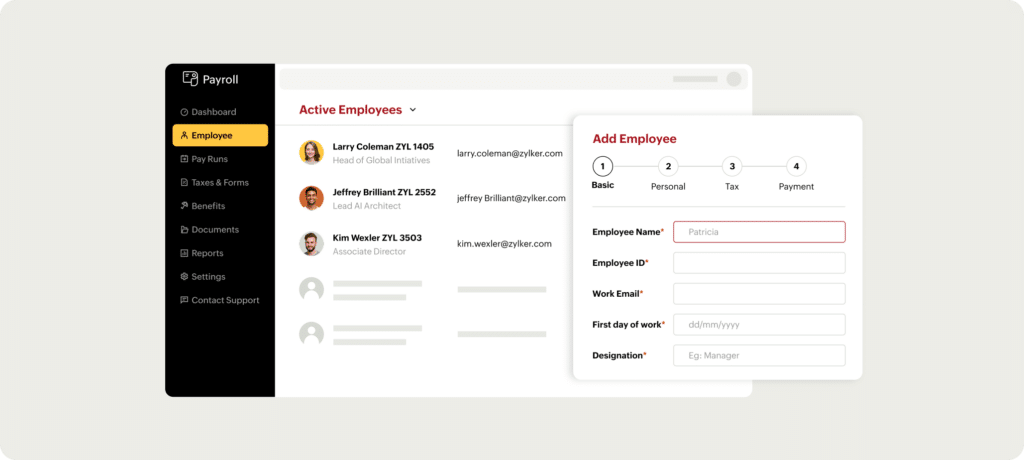
The system should maintain accurate employee profiles, including salary details, job title, department, joining date, bank information, contracts, and employment status.
Payroll should use this data directly instead of requiring manual re-entry.
Attendance and Leave Integration
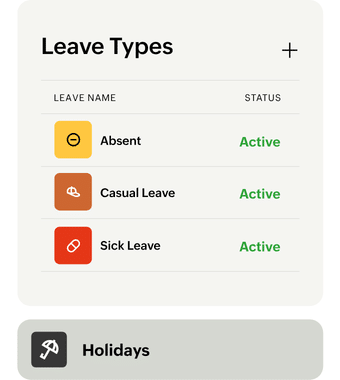
Payroll should connect with attendance and leave management. This helps calculate absences, unpaid leave, overtime, and deductions more accurately.
When attendance and payroll are disconnected, HR teams spend too much time reconciling records.
Social Insurance Support
A local payroll system should help calculate employee and employer social insurance contributions based on updated insurable wage rules.
This is especially important in payroll Egypt workflows because social insurance is a recurring monthly requirement.
Tax Calculation Support
The system should support salary tax calculations, exemptions, brackets, and reporting requirements where applicable.
Payroll Approval Workflows
Payroll should not be processed without review. Approval workflows help make sure payroll changes are checked before final processing.
Payslips and Employee Self-Service
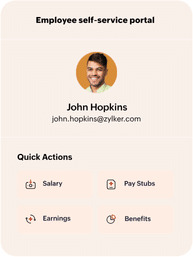
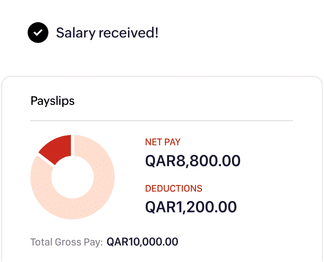
Employees should be able to access payslips and relevant payroll information without sending repeated requests to HR.
Reporting
The system should provide clear reports for HR, finance, management, and compliance review. Payroll reports should help the business understand salary costs, deductions, employer contributions, and payroll trends.
Why Attendance, Leave, and Payroll Should Be Connected
One of the biggest problems in payroll operations is separating attendance from payroll.
Attendance is not just a daily HR record. It directly affects salary calculations.
For example:
- Unpaid leave may reduce salary.
- Overtime may increase salary.
- Absence deductions may apply.
- Late arrivals may require policy-based deductions.
- Shift schedules may affect pay rules.
When this information is handled manually, payroll preparation becomes a long reconciliation exercise.
HR teams must collect attendance records, verify leave balances, check approvals, confirm exceptions, and then enter the results into payroll calculations. This creates delays and increases the chance of errors.
A better approach is to connect attendance, leave, and payroll in one system.
This allows payroll to use approved HR data directly. Instead of moving information between tools, payroll becomes part of the employee management workflow.
For growing companies, this is one of the most important benefits of HR and payroll software. It reduces repetitive work while improving payroll accuracy.
Multi-Country and Multi-Currency Payroll Considerations
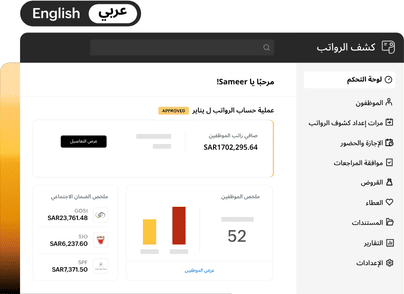
Many Egyptian companies today operate beyond one location or one market. Some have regional branches, remote employees, international consultants, or teams working across multiple currencies.
This creates additional payroll complexity.
A company may need to manage:
- Salaries in different currencies
- Employees in different countries
- Different local compliance requirements
- Different salary structures
- Different benefits and allowances
- Different reporting needs
This is why businesses should consider whether their payroll system can support multi-country or multi-currency operations, even if they do not need it immediately.
A company may start with Egypt-only payroll today, but if it expands into the GCC or MENA region, the payroll system should not become a limitation.
Cloud-based payroll platforms can be especially useful here because they are easier to scale and update compared with traditional spreadsheet-based payroll processes.
How Zoho Payroll Helps Automate Payroll
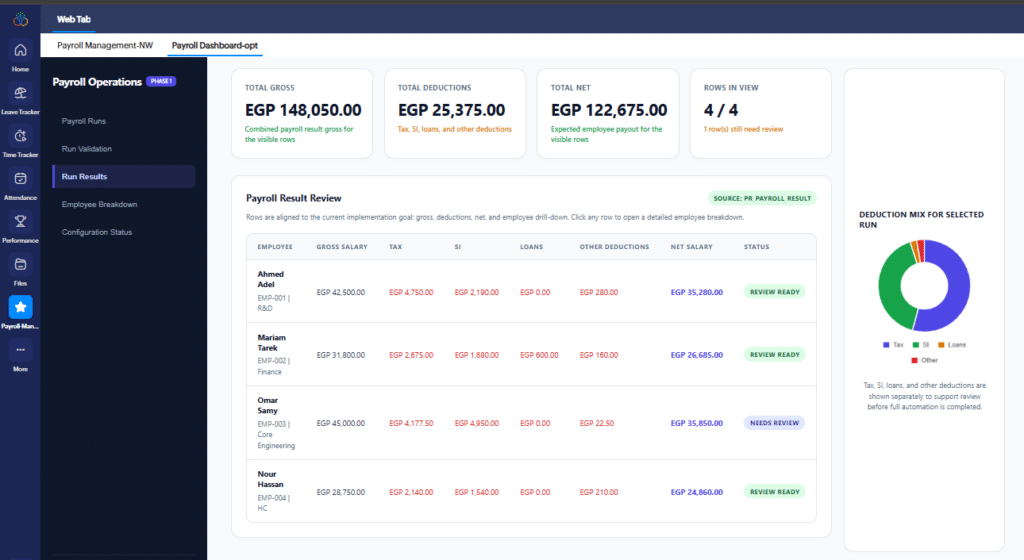
Zoho Payroll helps businesses manage payroll through a cloud-based system that connects employee data, payroll calculations, payslips, deductions, and reporting.
When integrated with Zoho People, employee information can flow from HR into payroll without repeated manual entry. This helps reduce one of the biggest causes of payroll errors: disconnected data.
Zoho Payroll can support payroll teams by helping with:
- Employee salary structures
- Payroll calculations
- Deductions and allowances
- Payslip generation
- Payroll reports
- Employee self-service
- Integration with HR data
- Payroll process automation
The real value of Zoho Payroll is not only that it calculates salaries. The value is that it helps companies build a more controlled payroll workflow.
Instead of every month starting from a spreadsheet, HR teams can work from updated employee records, connected attendance information, and structured payroll rules.
For Egyptian companies, Zoho Payroll can be configured around local payroll needs, including tax and social insurance considerations, when implemented properly by an experienced partner.
Why Zoho Payroll Works Better as Part of Zoho HR Suite
Payroll should not operate alone. It works best when connected to the full employee lifecycle.
This is why Zoho Payroll becomes more powerful when used with Zoho People and Zoho Recruit as part of Zoho HR Suite.
The full flow looks like this:
- Zoho Recruit manages hiring.
- Zoho People manages employee records, attendance, leaves, onboarding, documents, and performance.
- Zoho Payroll processes salaries using employee and HR data.
This creates one connected HR operation from hiring to payroll.
- For HR teams, this means less duplicate data entry.
- For finance teams, it means cleaner payroll reports.
- For employees, it means better transparency and fewer payroll-related issues.
- For management, it means stronger visibility over workforce cost and HR operations.
This is the difference between using payroll software as a calculator and using HR and payroll software as a complete people operations system.
Why Implementation Matters
Payroll software is only as good as its implementation. Even the best system can fail if salary structures, allowances, deductions, approval workflows, attendance policies, and reporting needs are not configured properly.
Before implementing payroll software, companies should define:
- Salary components
- Allowances
- Deductions
- Overtime rules
- Leave policies
- Attendance policies
- Social insurance handling
- Tax calculation requirements
- Approval workflows
- Reporting formats
- User permissions
This is where PyramidBITS adds value.
PyramidBITS does not position payroll software as a simple plug-and-play tool. We help Egyptian businesses implement Zoho Payroll around their real HR and finance workflows.
That means understanding how payroll is currently calculated, identifying manual steps, configuring the right structure, training the team, and supporting the company after launch.
The goal is not just to digitize payroll. The goal is to make payroll faster, clearer, more accurate, and easier to control.
Questions to Ask Before Choosing Payroll Software
Before choosing a payroll system, Egyptian companies should ask practical questions.
- Does the system support Egyptian payroll requirements?
- Can attendance and leave data flow into payroll?
- Can the company define salary structures, allowances, deductions, and approvals?
- Can employees access their payslips?
- Can HR and finance generate reports easily?
- Can the system scale if the company grows?
- Can it support multi-country or multi-currency needs later?
- Is there a local implementation partner who understands Egyptian payroll workflows?
These questions are more important than choosing the cheapest option.
Payroll touches every employee and every month. The cost of choosing the wrong system is usually much higher than the software subscription.
FAQs About HR and Payroll Software in Egypt
What is HR and payroll software?
HR and payroll software is a system that helps companies manage employee records, attendance, leave, salary calculations, deductions, payslips, approvals, and payroll reports in one connected workflow.
Why is payroll software important in Egypt?
Payroll software is important in Egypt because payroll must account for salary tax, social insurance, attendance, leave, deductions, and compliance requirements. Manual payroll increases the risk of errors and delays.
Can Zoho Payroll support Egyptian payroll workflows?
Yes. Zoho Payroll can be configured to support Egyptian payroll workflows when implemented properly, including employee data, deductions, payroll calculations, reporting, and integration with Zoho People.
What is the difference between payroll software and HR payroll software?
Payroll software focuses mainly on salary calculations. HR payroll software connects payroll with HR data such as employee records, attendance, leaves, onboarding, and approvals.
Should payroll be connected to attendance?
Yes. Attendance directly affects payroll through absence deductions, overtime, unpaid leave, and shift-related rules. Connecting attendance and payroll improves accuracy and reduces manual work.
Can payroll software support multi-country teams?
Some payroll systems can support multi-country and multi-currency requirements. This is important for companies with regional teams, remote employees, or expansion plans.
Conclusion
Choosing the right HR and payroll software is one of the most important decisions for Egyptian companies that want better payroll control, fewer mistakes, and stronger compliance readiness.
Manual payroll may seem manageable at first, but as the company grows, spreadsheets become risky. Attendance data becomes harder to reconcile, employee records change frequently, social insurance calculations need updates, and payroll approvals become harder to track.
A proper payroll system should connect HR data, attendance, leave, deductions, tax considerations, social insurance, payslips, approvals, and reporting into one clear workflow.
Zoho Payroll, especially when connected with Zoho People, gives businesses a more structured way to manage payroll and reduce manual work. With the right implementation, it can help HR and finance teams run payroll faster, more accurately, and with greater confidence.
If your payroll process still depends on Excel, manual attendance exports, and repeated monthly calculations, it may be time to move to a more controlled system.
PyramidBITS helps Egyptian companies implement Zoho Payroll around their real HR and finance workflows, from employee data and attendance to payroll calculations and reporting.