Introduction
If you’re a business owner in Egypt trying to decide whether Zoho CRM is worth adopting, you’re not short on marketing pages telling you it’s “powerful” and “all-in-one.” What’s harder to find is a straight answer to the questions that actually matter: what does it cost here, does it work with WhatsApp the way Egyptian teams actually communicate, and is it worth it compared to Salesforce, HubSpot, or Odoo. This guide answers all of the :Zoho CRM Egypt” questions in one place.
Why Egyptian Businesses Are Moving to Zoho CRM Right Now
This isn’t a slow trend — it’s accelerating fast, and for reasons specific to Egypt, not just global CRM adoption. Ahram Online reported that Egypt is now Zoho’s fastest-growing market worldwide, with customer growth around 57% CAGR and revenue up roughly 41% in 2024–2025 alone, driven by partnerships across financial services, retail, education, and manufacturing.
Two forces are pushing this growth:
Regulatory pressure. The Egyptian Tax Authority’s e-invoicing mandate is pushing companies above a revenue threshold toward integrated CRM+ERP systems — you simply can’t stay compliant on spreadsheets much longer.
Cost pressure. Egyptian companies are price-sensitive by necessity, and Zoho CRM’s pricing sits well below Salesforce or Microsoft Dynamics for comparable functionality, which matters enormously when EGP volatility is already squeezing budgets.
What Is Zoho CRM?
Zoho CRM is a cloud-based customer relationship management platform that helps companies manage leads, sales pipelines, customer communication, and reporting from one connected system, instead of splitting that work across spreadsheets, WhatsApp, and email. A zoho crm egypt setup, in practical terms, replaces three habits at once: chasing leads manually, updating spreadsheets by hand, and finding out how sales is really doing only at month-end.
Core Features That Matter for Egyptian Companies
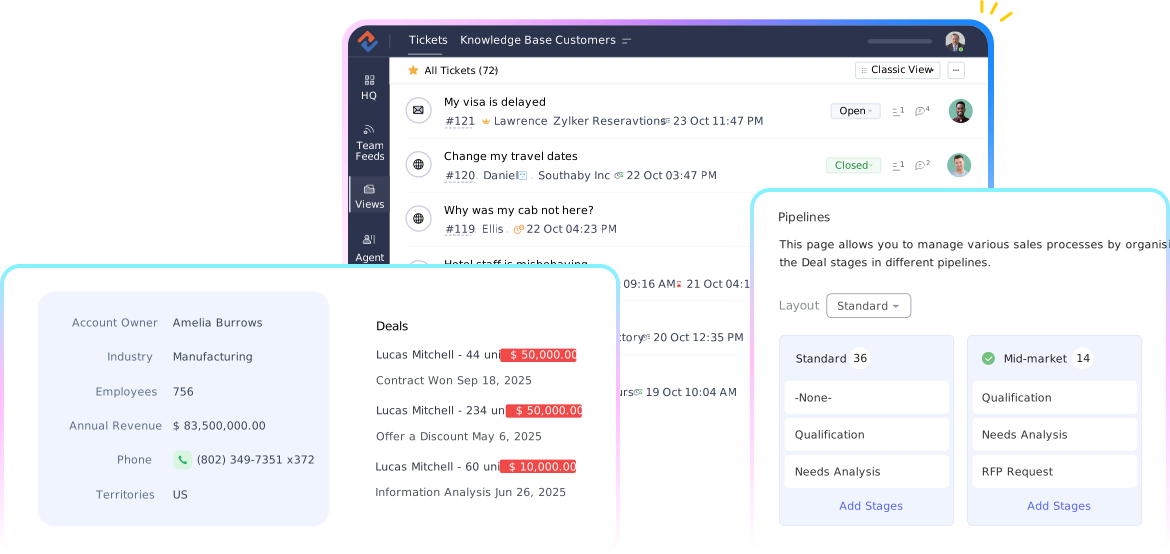
Zoho CRM has dozens of features, but for a growing zoho crm egypt deployment, these are the ones that actually change how a team works day to day:
Lead capture and distribution. Every lead — from Facebook ads, web forms, or WhatsApp — lands automatically in one system and gets routed to the right rep instantly, instead of sitting in an inbox or a shared spreadsheet.
WhatsApp integration. Zoho CRM connects natively to WhatsApp Business, which matters enormously here — most Egyptian sales conversations happen there, not over email, and a CRM that ignores that reality doesn’t get adopted.
Sales pipeline and Blueprints. Deals move through defined stages with enforced rules, so a deal can’t quietly skip a required step, and managers see exactly where things stall.
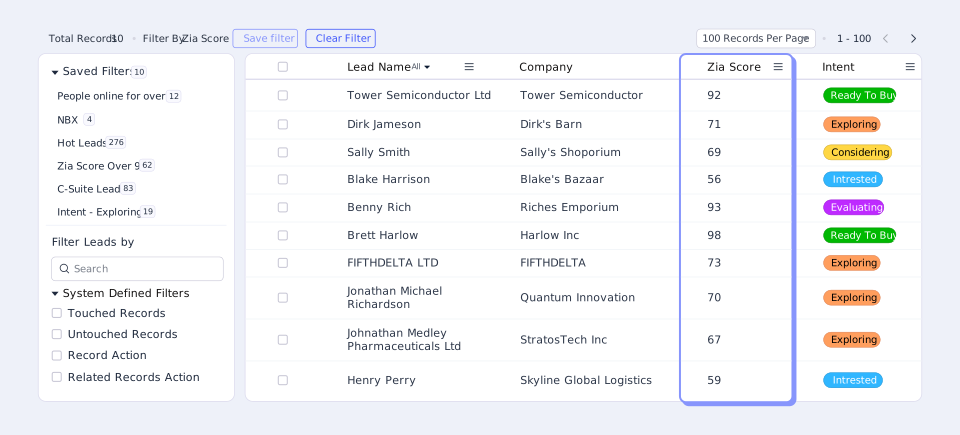
Zia AI. Zoho’s built-in AI assistant scores leads, predicts which deals are likely to close, and flags deals at risk — all included from the Professional tier up, not sold as a separate expensive add-on the way some competitors price their AI features.
Dashboards and reporting. Real-time visibility into pipeline health, without waiting for someone to compile a report at the end of the month.
Bilingual support. Zoho CRM offers native Arabic RTL interface support, which matters for teams where not everyone works comfortably in English all day.
Zoho CRM Egypt Pricing: What to Expect
Zoho CRM is priced per user per month, with tiers running from a free plan (3 users) up to Ultimate for larger teams needing advanced analytics.
Zoho CRM Plus and Zoho One bundle CRM with other Zoho apps (Books, Projects, HR tools) at a flat per-user rate, which often works out cheaper than buying several separate systems.
Exact current tiers and rates are on Zoho’s official pricing page and the Zoho One pricing FAQ, since these do get updated — we’ll break down the Egypt-specific cost picture (including typical implementation cost ranges) in full detail in a dedicated pricing guide.
Zoho CRM vs Salesforce, HubSpot, and Odoo: A Quick Comparison
The short version: Salesforce and Microsoft Dynamics are built for large enterprises and priced accordingly — usually 2–3x Zoho’s cost for similar functionality. HubSpot’s free tier is generous for very early-stage teams but gets expensive quickly once you need real automation.
Odoo is genuinely strong on the ERP side and has a larger local partner network in Egypt, but Zoho CRM’s sales-specific features and AI (Zia) are generally deeper out of the box.
For most Egyptian companies with an active sales team and real lead volume, Zoho CRM sits in the sweet spot between “too basic” and “too expensive to justify.” We go deeper into a full head-to-head comparison, including where each platform actually wins, in a dedicated post later in this series.
Zoho CRM Across Industries
A zoho crm egypt implementation looks different depending on the industry, because the pain points aren’t identical.
Real estate developers need unit inventory tracking, broker performance visibility, and payment plans built directly into the pipeline — covered in our dedicated guide to Zoho CRM for real estate teams.
B2B companies with longer, more complex sales cycles need structured Blueprints, multi-stakeholder deal tracking, and tighter cross-team quotation workflows — covered in our complete guide to Zoho CRM for B2B sales.
The core platform is identical either way; the configuration around it is what determines whether the system actually gets used, or quietly ignored after month two.
Real Results: How Sprints.ai Used Zoho One to Scale
Sprints.ai, a Cairo-based education company, ran its operations on Google Suite and Google Sheets — the same setup a lot of growing Egyptian companies are still using. Data was fragmented across tools, and there was no real integration between departments.
PyramidBITS migrated Sprints.ai onto Zoho One, implementing Zoho CRM for sales tracking, Zoho Books for finance, Zoho Mail and WorkDrive to replace Google Suite, and Zoho People and Recruit for HR and hiring — all connected in one ecosystem, with integrations into Facebook, Google Ads, and Google Business.
The result: centralized operations, reduced data silos, automated workflows across HR, finance, and project management, real cost savings from retiring third-party tools, and a 30% increase in overall productivity.
Implementing Zoho CRM the Right Way — The PyramidBITS Approach
Zoho CRM’s flexibility is also its risk: badly configured, it becomes an expensive, unused system nobody trusts. Finding a genuine zoho crm partner egypt businesses can actually rely on matters as much as the software itself. As a Zoho Authorized Partner in Egypt, PyramidBITS implements it around how your business actually operates, not a generic template — our complete Zoho CRM implementation guide covers the full technical rollout in more depth. The short version:
- Process mapping first — understanding your real sales and lead flow before touching any settings.
- Configuration matched to your team — lead scoring, pipeline stages, and assignment rules built for your business, not copied from a demo account.
- WhatsApp and channel integration set up from day one, since this is where most Egyptian sales conversations actually happen.
- Team training, not just an admin walkthrough — the whole sales team needs to trust the system to actually use it.
- Ongoing support and localization, including Arabic interface configuration and Egypt-specific workflow needs.
FAQs
Is Zoho CRM good for small businesses in Egypt?
Yes. A zoho crm egypt setup starts with a free tier for up to 3 users and affordable paid tiers well below Salesforce or Dynamics 365 pricing, making it accessible for small and growing Egyptian companies specifically.
Does Zoho CRM support Arabic and WhatsApp?
Yes to both. Zoho CRM has native Arabic RTL interface support and connects directly to WhatsApp Business, letting teams keep using WhatsApp while every conversation is logged and tracked inside the CRM.
How is Zoho CRM different from Zoho One?
Zoho CRM is the standalone sales and pipeline management product. Zoho One is a bundle of 45+ Zoho apps — including CRM, Books, People, and Projects — at a flat per-user price, suited to companies that need more than just sales tools.
Is Zoho CRM better than Odoo for Egyptian companies?
It depends on the need. Odoo has a larger local implementation partner network and stronger ERP depth. Zoho CRM generally has more mature sales-specific features and built-in AI (Zia) without extra cost. Companies needing primarily sales/CRM tools tend to prefer Zoho; companies needing deep ERP/manufacturing functionality often lean Odoo.
How long does a Zoho CRM implementation take in Egypt?
For most SMB and mid-market companies, a properly scoped implementation — including process mapping, configuration, and training — takes a few weeks, not months, assuming requirements are reasonably clear from the start.
Can Zoho CRM handle e-invoicing compliance for Egypt?
Zoho CRM itself doesn’t handle e-invoicing directly — that runs through Zoho Books or Zoho One’s finance module, integrated with your CRM data. A partner familiar with the ETA e-invoicing requirements should configure this specifically, since it isn’t automatic out of the box.
Book a Free Zoho CRM Demo
Whether you’re comparing CRMs for the first time or replacing a system that never quite fit, the fastest way to know if zoho crm egypt is right for your business is to see it configured around your actual workflow.
Book a free Zoho CRM demo with PyramidBITS, Egypt’s Zoho Advanced Partner, and get a straight answer instead of a generic sales pitch.