Introduction
Cloud HR software is becoming a practical choice for Egyptian companies that want to move away from Excel sheets, outdated on-premise systems, and manual HR processes. For many businesses, HR used to be managed through local files, spreadsheets, attendance exports, paper documents, and systems that only worked from the office network.
That setup may have worked when teams were smaller and HR processes were simpler.
But today, HR teams need to manage recruitment, employee data, onboarding, attendance, leaves, approvals, performance, documents, payroll inputs, reports, and employee requests across growing teams and multiple locations. Employees may work from different branches, managers may need to approve requests remotely, and leadership needs faster visibility over workforce data.
This is why many companies are moving from traditional HR tools to cloud-based HRIS systems.
Cloud HR software gives companies access to HR data and workflows through an online platform. Instead of keeping employee records and HR processes locked inside office-based systems or scattered Excel files, businesses can manage HR through a secure, centralized system that is easier to update, scale, and access.
For Egyptian companies, the shift is not only about technology. It is about reducing manual work, improving employee experience, and giving HR teams better control.
What Is Cloud HR Software?
Cloud HR software is an online HR system that helps companies manage employee-related processes through a web-based platform.
Instead of installing software on a local server or relying on files stored on company devices, HR teams can access the system through the internet with proper user permissions.
A cloud HR platform can support:
- Employee records
- Attendance
- Leave management
- Onboarding
- Offboarding
- Document management
- Performance reviews
- Recruitment
- Payroll integration
- Employee self-service
- Reports and analytics
- Approval workflows
Zoho People, for example, is officially described as cloud-based HR software that supports onboarding, time and attendance, performance, learning management, HR help desk, document management, employee engagement, and reports.
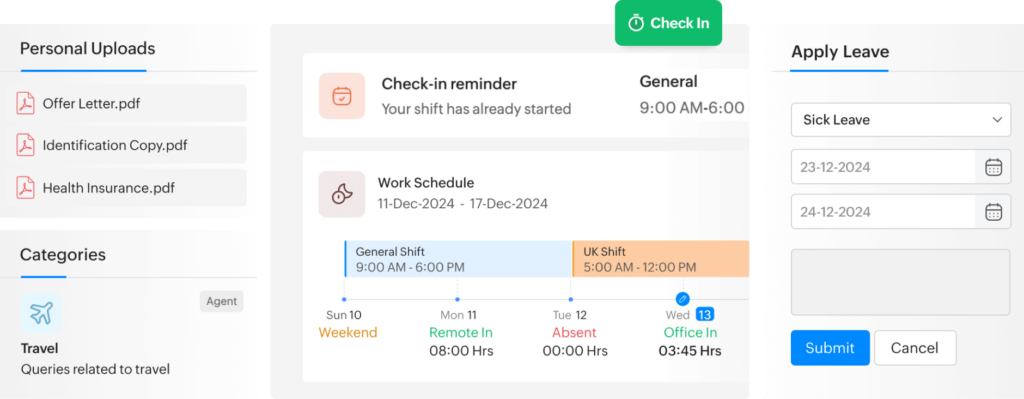
This makes cloud HR useful for companies that want to replace manual administration with structured digital workflows.
On-Premise HR vs Cloud HR Software
Traditional on-premise HR systems are installed on company servers or local machines. They may require internal IT support, manual updates, local backups, and access through office networks.
Cloud HR software works differently. The system is hosted online by the software provider, and the company accesses it securely through browsers or apps.
The difference affects cost, access, maintenance, scalability, and daily usage.
| Area | On-Premise HR System | Cloud HR Software |
|---|---|---|
| Access | Usually limited to office network or VPN | Accessible online with permissions |
| Updates | Requires manual upgrades or IT work | Provider-managed updates |
| Setup | Often heavier infrastructure | Faster deployment |
| Cost | Server, maintenance, licenses, IT overhead | Subscription-based |
| Scalability | Requires more infrastructure planning | Easier to add users/modules |
| Remote use | More difficult | Easier for branches and remote teams |
| Backups | Managed internally | Provider/cloud-based approach |
| User adoption | Often less flexible | Usually easier through web/mobile access |
This does not mean every on-premise system is bad. Some companies have special requirements that may justify it. But for many Egyptian SMEs, cloud HR software is more practical because it reduces infrastructure burden and makes HR easier to access and manage.
Why Egyptian Companies Are Moving Away from Excel and Local HR Systems
Many companies in Egypt still manage HR through a mix of Excel, local attendance systems, folders, and manual approvals.
This creates recurring problems:
- Employee records are scattered.
- HR files are duplicated.
- Attendance reports need manual cleaning.
- Leave balances are updated by hand.
- Payroll inputs are checked every month from scratch.
- Managers approve requests through WhatsApp or email.
- Reports take too long to prepare.
- Employees keep asking HR for simple information.
As the company grows, these problems become more expensive.
A missing attendance update can affect payroll. An outdated salary value can create payroll errors. A delayed leave approval can affect team planning. A lost employee document can create compliance and audit issues.
Cloud HR software helps solve these problems by centralizing the process.
Instead of every HR task living in a different file or system, the company can build one connected HR workflow.
Benefit 1: Lower Infrastructure and Maintenance Cost
One of the strongest reasons companies move to cloud HR is cost control.
On-premise systems may require servers, local installation, upgrades, backups, IT maintenance, and support. Even if the software license seems affordable, the hidden cost can become high over time.
Cloud HR software usually works through subscription-based pricing. This makes it easier for companies to plan costs based on the number of users, modules, or features they need. For SMEs, this is especially valuable.
A company can start with the HR functions it needs today, then expand later as the team grows. This is different from investing in a heavy system from day one.
For Egyptian businesses that care about implementation cost, support, and long-term scalability, cloud HR can be more practical than maintaining local HR infrastructure.
Benefit 2: Easier Access for HR, Managers, and Employees
HR does not only happen inside the HR office.
Managers need to approve leaves. Employees need to check balances. Finance needs payroll inputs. Leadership needs reports. Recruitment teams need access to candidate and employee data. Branch managers may need attendance visibility.
If the HR system only works from one office or one device, the process slows down.
Cloud HR software allows authorized users to access the system online. This makes HR easier for:
- Multi-branch companies
- Hybrid or remote teams
- Managers outside the office
- Field employees
- HR teams working across locations
- Employees who need self-service access
Zoho People supports HR processes such as leave submissions, approvals, attendance, reports, and analytics, helping managers and employees interact with HR data more easily.
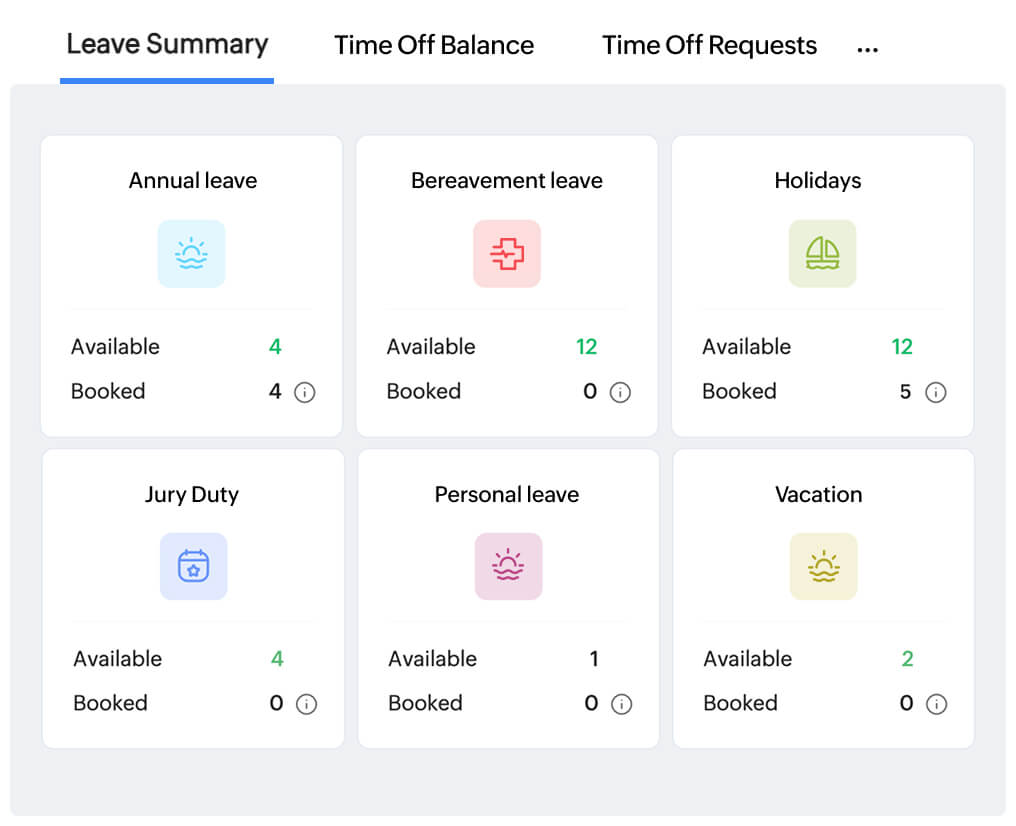
The result is less chasing and fewer manual follow-ups.
Benefit 3: Faster Updates and Better Scalability
Business rules change. HR policies change. Teams grow. New branches open. Payroll processes evolve. Reporting requirements become more detailed.
With on-premise systems, updates may require technical support, downtime, or manual work from IT teams.
Cloud HR software is easier to update and scale. The provider manages platform updates, and businesses can often activate new features, workflows, or integrations without rebuilding the system from scratch.
For growing companies, this matters because HR systems need to keep up with business growth.
A company may start with employee records and leave management. Later, it may add attendance, performance, recruitment, payroll integration, documents, or advanced reports.
Zoho People’s official features include attendance management, time-off policies, approvals, reports, analytics, and integration with Zoho Payroll and other applications.
This gives companies a path to expand HR gradually instead of replacing the system every time their needs change.
Benefit 4: Better Employee Self-Service
One of the biggest hidden costs in HR is repeated employee requests.
Employees ask HR about leave balances, payslips, attendance records, company documents, personal data updates, approvals, and policy details.
Each request may take only a few minutes, but across a growing company, the time adds up. Cloud HR software helps by giving employees self-service access.
Through employee self-service, employees can:
- View their profile
- Submit leave requests
- Check leave balances
- Access documents
- Track requests
- Review attendance records
- Update selected personal information
- Access HR announcements or policies
This reduces routine HR workload and improves the employee experience.
Instead of HR being the only gateway to every piece of information, employees can find what they need inside the system.
Benefit 5: Stronger HR Reporting and Visibility
HR reporting becomes difficult when data is scattered across Excel files, emails, attendance machines, and local systems.
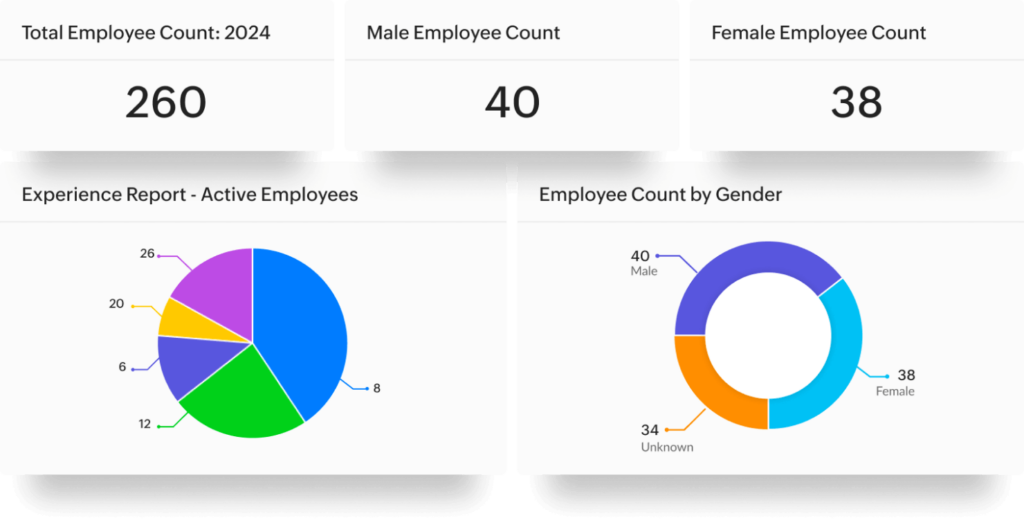
Management may ask for simple reports such as:
- Headcount by department
- Leave trends
- Attendance issues
- Employee turnover
- Hiring status
- Payroll input summaries
- Performance status
- Workforce cost indicators
If HR needs to collect and clean data manually every time, reporting becomes slow.
Cloud HR software helps centralize HR data, making reports easier to prepare and review. Zoho People includes reports and analytics that help businesses review HR metrics and workforce performance.
For business owners and HR managers, this means better visibility.
Instead of waiting for manual reports, leadership can make faster decisions based on more organized HR data.
Benefit 6: Better Security and Access Control
Some companies worry that cloud software is less secure than on-premise software. The concern is understandable because HR data is sensitive.
Employee records include personal information, salaries, documents, attendance data, contracts, and payroll-related details.
But security depends on configuration, access policies, vendor controls, and user behavior. A local system is not automatically safer just because it is inside the office. Many companies store HR data in unprotected Excel files, shared folders, or devices with weak access control.
Cloud HR software can help improve security when configured properly.
A strong setup should include:
- User roles and permissions
- Admin access control
- Strong password policies
- Two-factor authentication where available
- Secure employee self-service
- Controlled document access
- Approval trails
- Data backup practices
The key is implementation.
PyramidBITS helps companies configure HR access around real responsibilities, so employees, managers, HR, finance, and leadership see only what they should see.
Common Concern: “Will Cloud HR Work for Egyptian Payroll and Attendance?”
This is one of the most important questions for Egyptian companies.
Cloud HR software should not be selected only because it looks modern. It must fit local HR workflows.
Egyptian companies usually need to manage:
- Attendance
- Shifts
- Overtime
- Leaves
- Absence deductions
- Employee records
- Payroll inputs
- Social insurance and tax considerations
- Approval structures
- Branch-level reporting
Zoho People can manage employee data, attendance, leave, onboarding, performance, and HR workflows. Zoho Payroll integration can help connect payroll-related activities more smoothly with HR data. Zoho’s documentation notes that payroll integration with Zoho People is designed to automate and streamline payroll processing, reduce human error, and save time.
For Egypt, the exact setup must be configured based on the company’s policies, payroll process, and compliance requirements.
That is why local implementation matters.
Common Concern: “Will Employees Use It?”
A cloud HR system only works if employees and managers actually use it.
Some companies buy HR software, but the team continues using WhatsApp, Excel, and email because no one was trained properly.
Successful adoption requires:
- Simple workflows
- Clear approval paths
- Manager training
- Employee onboarding
- HR admin training
- Practical SOPs
- Post-launch support
The system should make daily work easier, not more complicated.
PyramidBITS focuses on implementation and training because HR software is not only a technical setup. It is a process change.
Employees need to know where to submit requests. Managers need to know how to approve. HR needs to trust the data. Finance needs to understand payroll inputs.
When the rollout is planned properly, adoption becomes much easier.
Common Concern: “Is Cloud HR Too Much for SMEs?”
Some SMEs think cloud HR software is only for large enterprises.
That is not always true.
Cloud HR can be especially useful for SMEs because it gives them structure before HR becomes chaotic.
A company does not need hundreds of employees to benefit from HR software. It may need it when:
- Attendance affects payroll every month.
- Leave balances are hard to track.
- Recruitment is scattered.
- Employee records are not centralized.
- HR reports take too long.
- Managers approve requests manually.
- The company is opening new branches.
- Payroll mistakes happen repeatedly.
Cloud HR software gives SMEs a scalable foundation. The company can start with core HR, then expand into recruitment, attendance, payroll, performance, and analytics later.
Zoho as Cloud HR Software
Zoho HR solutions, including Zoho People, Zoho Recruit, and Zoho Payroll, can help companies manage the full employee journey from hiring to payroll.
Zoho People acts as the core HR platform for employee records, attendance, leave, onboarding, approvals, documents, performance, reports, and HR workflows. Zoho Recruit supports hiring and candidate tracking. Zoho Payroll supports payroll calculations, salary components, deductions, payslips, and payroll reports.
Together, they can create a connected HR system for companies that want more than isolated HR tools.
This is especially useful for businesses that need:
- One employee database
- Structured leave and attendance workflows
- Recruitment visibility
- Payroll integration
- Employee self-service
- Reports and analytics
- Cloud access across branches
- Scalable HR processes
Zoho People Plus also positions Zoho’s HR suite around a unified employee experience across hiring, HR, performance, learning, engagement, and service delivery.

For Egyptian companies, Zoho becomes more valuable when implemented around local policies, attendance rules, payroll workflows, and management reporting needs.
Why PyramidBITS for Zoho Cloud HR Implementation?
Choosing cloud HR software is only the first step.
The real value comes from implementation.
PyramidBITS helps Egyptian companies implement Zoho HR solutions around their actual workflows, not generic templates. This includes understanding how HR currently works, identifying manual gaps, configuring the right modules, setting approval flows, training users, and supporting adoption after launch.
PyramidBITS can help with:
- HR process assessment
- Zoho People setup
- Zoho Recruit setup
- Zoho Payroll setup
- Attendance and leave configuration
- Approval workflows
- Employee database structure
- Payroll integration planning
- Reports and dashboards
- Training and support
PyramidBITS’ HR campaign positioning focuses on solving manual recruitment, scattered employee data, attendance and leave handling, payroll errors, repeated data entry, and weak HR analytics through Zoho Recruit, Zoho People, and Zoho Payroll.
The objective is not only to move HR to the cloud. The objective is to make HR easier to manage, easier to scale, and easier to trust.
FAQs About Cloud HR Software
What is cloud HR software?
Cloud HR software is an online HR system that helps companies manage employee records, attendance, leave, onboarding, recruitment, performance, payroll integrations, reports, and approvals through a web-based platform.
What is the difference between HR software and HRIS systems?
HR software is a broad term for tools that help manage HR processes. HRIS systems are usually more structured systems used to centralize employee information, HR workflows, reporting, and employee lifecycle data.
Is cloud HR software better than on-premise HR?
For many SMEs, cloud HR is more practical because it reduces infrastructure needs, improves access, supports easier updates, and scales more easily. However, the best choice depends on company requirements, security policies, and implementation needs.
Can Zoho People help with attendance and leave?
Yes. Zoho People supports attendance management, time-off policies, leave submissions, approvals, reports, and analytics.
Can Zoho HR connect with payroll?
Yes. Zoho People can integrate with Zoho Payroll to help streamline payroll-related workflows and reduce repeated manual data entry.
Is cloud HR software suitable for Egyptian companies?
Yes, cloud HR software can be suitable for Egyptian companies if it is configured around local HR policies, attendance workflows, payroll needs, approval structures, and reporting requirements.
Conclusion
Egyptian companies are switching to cloud HR software because HR is no longer simple enough to manage through Excel, local files, and disconnected systems.
As teams grow, HR needs better access, cleaner employee data, faster approvals, more accurate attendance tracking, easier reporting, and stronger payroll integration. On-premise systems and manual processes often make this harder than it needs to be.
Cloud HR software gives companies a more flexible and scalable way to manage people operations. It helps HR teams reduce repetitive admin work, gives employees self-service access, and gives management better visibility over workforce data.
Zoho HR solutions can support this shift through cloud-based tools for employee management, recruitment, attendance, leave, performance, payroll integration, and reporting.
With the right implementation from PyramidBITS, Egyptian companies can move from manual HR processes to a more connected and scalable cloud HR system.
If your HR team is still depending on Excel sheets, local systems, manual approvals, and repeated data entry, it may be time to move toward a cloud HR setup.
PyramidBITS helps Egyptian companies implement Zoho HR around real workflows, from recruitment and employee records to attendance, payroll, and reporting.