Introduction
Bank reconciliation is one of the most important controls in any finance team. It confirms that the numbers in your accounting system match what actually happened in the bank. For growing businesses, especially retail, eCommerce, service companies, and multi-branch operations, reconciliation is not only about matching bank statements. It is about connecting cash, POS sales, bank deposits, invoices, receipts, and payments into one reliable financial picture.
When reconciliation is handled manually, finance teams spend too much time comparing Excel sheets, POS exports, cash records, customer payments, and bank statements. Small differences can take hours to investigate. Missing deposits, duplicate transactions, delayed card settlements, wrong payment references, and unrecorded fees can all make the month-end closing process slower and more stressful.
This is where Zoho Books reconciliation becomes valuable.
Zoho Books helps finance teams organize transactions, match payments, review bank feeds, reconcile accounts, and connect sales activity with accounting records. Instead of treating reconciliation as a painful month-end task, Zoho Books helps make it part of the daily finance workflow.
For Egyptian SMEs, this matters because many businesses still rely on disconnected POS systems, manual bank tracking, cash collection sheets, and delayed accounting updates. As sales volume increases, the risk of mismatched numbers becomes higher.
A proper bank reconciliation process helps your company answer a simple but critical question: do the numbers in the system match the money in the bank?
Why Bank Reconciliation Matters
Bank reconciliation compares your accounting records with bank activity to confirm that both sides match.
In practice, this means checking whether recorded invoices, receipts, payments, deposits, transfers, bank fees, refunds, and withdrawals are reflected correctly in the bank statement.
Without reconciliation, the finance team may not know whether cash flow numbers are accurate.
Bank reconciliation helps businesses:
- Confirm cash and bank balances
- Detect missing payments
- Identify duplicate transactions
- Spot bank fees and charges
- Track delayed deposits
- Validate POS settlements
- Confirm customer collections
- Improve cashflow management
- Close the month with more confidence
For business owners, reconciliation gives trust in the numbers. For accountants, it reduces uncertainty. For finance managers, it creates better control over cash and bank activity.
If reconciliation is delayed, every report that depends on bank and cash balances becomes less reliable.
Why Manual Reconciliation Becomes Risky as the Business Grows
Manual reconciliation may work when the business has a small number of transactions. The accountant can compare the bank statement with the accounting sheet and identify differences manually.
But as the company grows, the process becomes harder.
More transactions mean more payments, more card settlements, more cash deposits, more bank fees, more transfers, and more receipts to match. If the business has multiple branches, POS systems, or sales channels, reconciliation becomes even more complex.
Manual reconciliation creates problems such as:
- Long month-end closing cycles
- Errors from copy-pasting data
- Missed bank fees
- Duplicate entries
- Unmatched POS settlements
- Delayed cash deposit tracking
- Difficulty matching customer payments
- Weak visibility over real cash position
The issue is not that accountants are not careful. The issue is that manual reconciliation depends too much on repetitive checking.
A finance team should not spend most of its time chasing mismatches. It should have a system that helps organize, match, and review transactions more efficiently.
The Real Challenge: POS, Cash, Bank, Invoices, and Receipts Must Match
For many companies, reconciliation is not just bank versus accounting.
The real challenge is matching several sources of truth.
A retail company may have:
- POS sales reports
- Cash collected from branches
- Card settlements
- Bank deposits
- E-receipts
- Customer invoices
- Refunds and returns
- Delivery payments
- Bank charges
If these numbers are not connected, finance teams must manually rebuild the story.
For example, a POS report may show total daily sales. Some payments were cash. Some were card. Some card payments settle after one or two days. Some refunds reduce the final amount. Bank fees may be deducted before deposit. Cash may be deposited later by the branch manager.

By the time finance compares the POS report with the bank statement, the numbers rarely match directly.
This is why POS reconciliation needs a structured workflow.
The finance team needs to track not only the final bank amount, but also the reason behind every difference.
Zoho Books can help by giving finance teams a more organized place to connect sales, receipts, payments, deposits, and reconciliation activity.
How Zoho Books Reconciliation Helps Finance Teams
Zoho Books reconciliation helps finance teams review bank transactions and match them with accounting records more efficiently.
Instead of comparing everything manually in Excel, accountants can work inside the accounting system where invoices, payments, bills, expenses, transfers, and bank transactions are already organized.
This helps teams:
- Match bank transactions with recorded payments
- Identify unmatched items
- Categorize bank charges or fees
- Record missing transactions
- Review deposits and withdrawals
- Track customer payments
- Reconcile accounts more regularly
- Reduce manual month-end pressure
The value is not only speed. It is control.
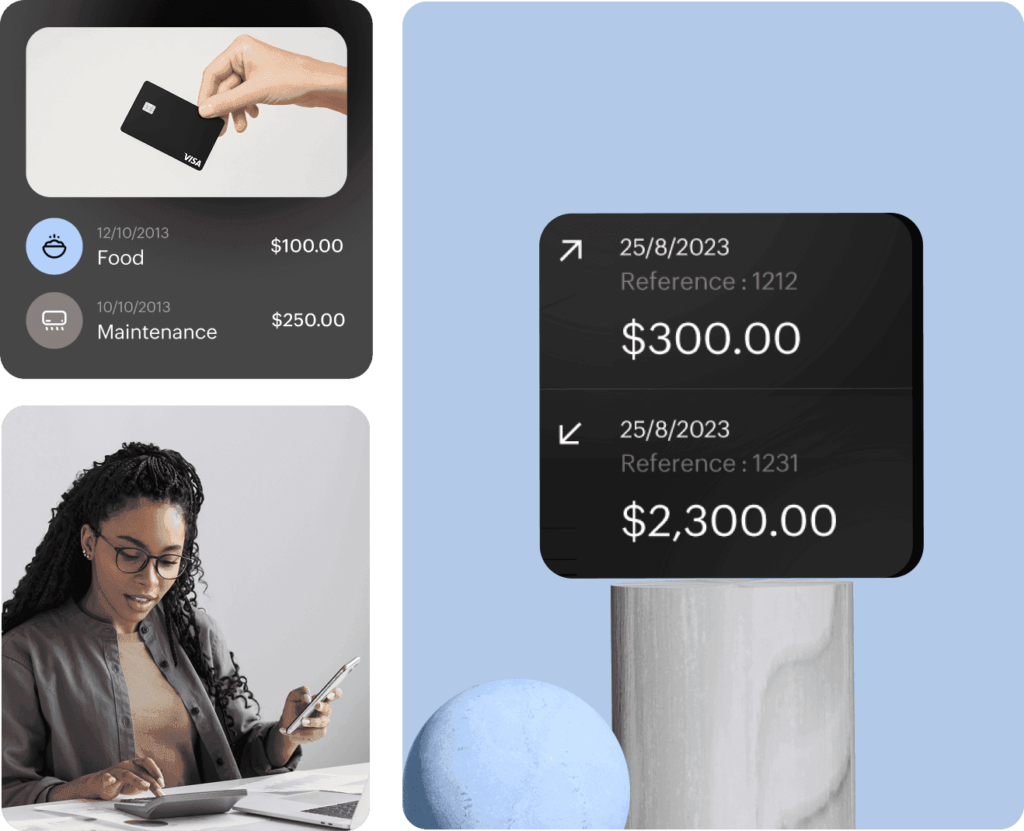
When reconciliation happens inside Zoho Books, finance teams work from the same accounting records that support financial reports, cashflow visibility, receivables, payables, and management dashboards.
This improves trust in the numbers.
Bank Feeds: Bringing Bank Activity Closer to Accounting
Bank feeds help bring bank activity into the accounting workflow.
Instead of manually downloading statements and entering transactions one by one, bank feeds can help accountants review bank-side activity more easily inside the accounting system, depending on availability and setup.
For finance teams, this reduces repetitive manual work.
Bank feeds can support:
- Faster transaction review
- Easier payment matching
- Better visibility over bank activity
- Reduced copy-paste errors
- More regular reconciliation
- Faster month-end closing
However, bank feeds are not a replacement for accounting review. They make the process easier, but accountants still need to confirm matching, categorization, timing differences, and exceptions.
In Zoho Books, the goal is to make bank activity easier to compare against accounting records, so finance teams can focus on reviewing exceptions instead of rebuilding everything manually.
Matching Customer Payments with Invoices
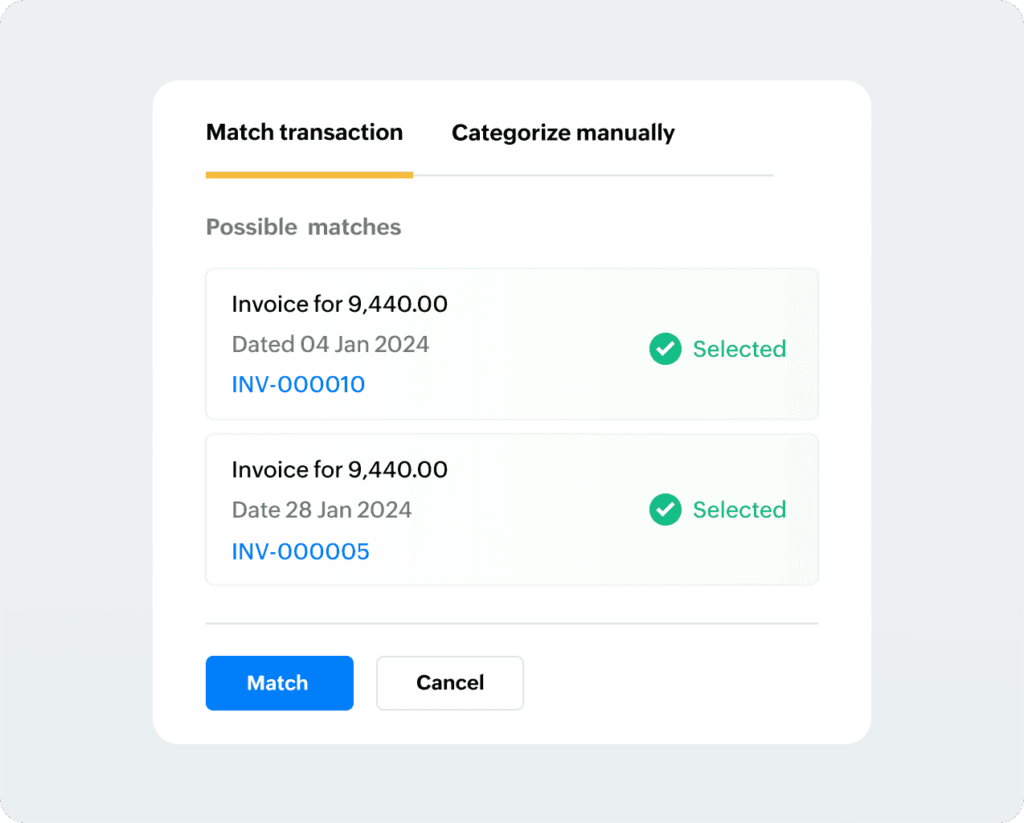
One of the most important reconciliation tasks is matching customer payments with invoices.
A customer may pay through bank transfer, card, cash, cheque, or online payment. If the payment reference is unclear or delayed, finance teams may struggle to identify which invoice was paid.
This creates problems such as:
- Invoices showing as unpaid when payment was received
- Customers being followed up incorrectly
- Cash balance appearing unclear
- Receivables reports becoming inaccurate
- Delayed month-end closing
Zoho Books helps organize customer invoices and payment records in one system. When payments are recorded and matched properly, receivables reports become more accurate.
This helps finance teams understand:
- Which invoices are paid
- Which invoices are overdue
- Which customers still owe money
- Which payments need review
- Which bank transactions are unmatched
For businesses with many customers, this improves collection tracking and cashflow management.
Matching Supplier Payments and Expenses
Reconciliation is not only about customer collections. Supplier payments and expenses also need to match bank activity.
If supplier bills, expenses, and payments are not recorded correctly, bank reconciliation becomes harder.
Finance teams may find withdrawals in the bank statement without clear accounting records. They may also record a supplier payment in the accounting system but not match it with the actual bank transaction.
This creates uncertainty.
Zoho Books helps structure supplier bills, expenses, payments, and bank transactions so finance teams can review outgoing money more clearly.
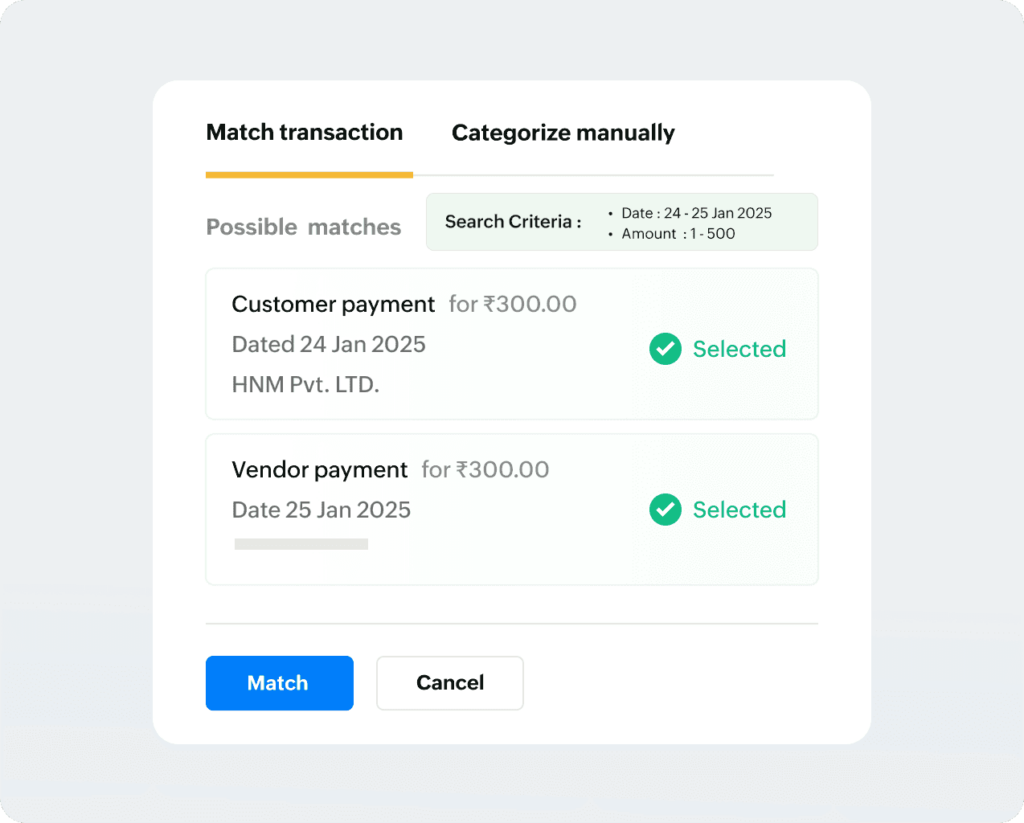
This is important for controlling:
- Vendor payments
- Operating expenses
- Bank charges
- Transfers
- Petty cash settlements
- Recurring payments
- Subscription costs
When outgoing payments are reconciled properly, expense reports and cash flow reports become more reliable.
POS Reconciliation for Retail and Multi-Branch Businesses
Retail businesses face a special reconciliation challenge because sales happen every day across different payment methods.
A branch may collect cash, card payments, online payments, and returns. At the end of the day, finance needs to confirm that sales numbers match what was deposited or settled.
The process becomes more complex when the business has multiple branches.
POS reconciliation should help answer:
- Did every POS sale get recorded?
- Did cash collected match the branch report?
- Did card payments settle in the bank?
- Were refunds recorded correctly?
- Were bank fees deducted?
- Are sales, receipts, and bank deposits aligned?
- Which branch has unresolved differences?
If these checks happen manually, the finance team spends too much time chasing branch-level differences.
Zoho Books can support a more structured reconciliation workflow by organizing sales records, receipts, payment accounts, bank activity, and reports in one accounting system.
For retailers, this creates stronger control over daily sales and month-end closing.
Reconciliation and Cashflow Management
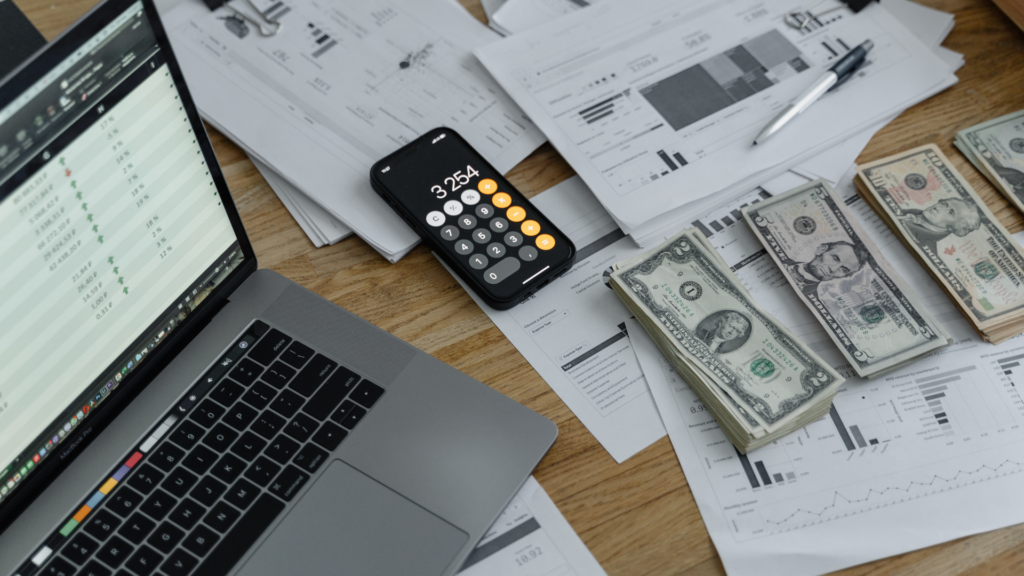
Cashflow management depends on accurate bank and cash numbers.
If bank reconciliation is delayed, cashflow reports may not reflect reality.
A business owner may believe the company has more cash than it actually does because some payments were not recorded, bank fees were missed, or deposits were delayed. On the other hand, the business may underestimate available cash because customer payments were received but not matched.
Accurate reconciliation supports better cashflow management by showing:
- Real bank balances
- Collected customer payments
- Pending receivables
- Outgoing supplier payments
- Bank fees and charges
- Timing differences
- Cash deposits
- Unmatched transactions
Zoho Books helps connect reconciliation with financial reporting, so cashflow visibility becomes more reliable.
For business owners, this supports better decisions around spending, purchasing, hiring, collections, and growth.
Reconciliation and Month-End Closing
Month-end closing becomes stressful when reconciliation is delayed.
If bank accounts, cash accounts, POS sales, invoices, receipts, and supplier payments are not matched during the month, the finance team must do everything at the end.
This creates pressure and increases error risk.
A cleaner approach is to reconcile regularly, not only at month-end.
Zoho Books helps finance teams turn reconciliation into a recurring process. Transactions can be reviewed, matched, categorized, and corrected throughout the month.
This leads to:
- Faster month-end closing
- Fewer last-minute surprises
- More accurate financial statements
- Better cash and bank visibility
- Less pressure on accountants
- Cleaner audit trail
The goal is not to make reconciliation disappear. The goal is to make it more controlled and less manual.
Accounting Automation: Reducing Repeated Manual Work
Reconciliation is one part of a larger accounting automation workflow.
When accounting tasks are disconnected, finance teams must keep moving data from one place to another. This creates repeated work and repeated risk.
Zoho Books helps automate and structure several accounting processes, including:
- Recurring invoices
- Payment tracking
- Expense recording
- Bank transaction matching
- Approval workflows
- Financial reports
- Customer statements
- Supplier payments
- Tax-related reports
This allows accountants to spend less time on manual data handling and more time reviewing accuracy, analyzing numbers, and advising the business.
For growing companies, accounting automation is not just about saving time. It is about creating financial control that can scale.
Why PyramidBITS for Zoho Books Reconciliation Setup?
Zoho Books can support reconciliation, bank activity review, invoices, payments, receipts, expenses, and reports. But the value depends on how the system is configured.
PyramidBITS helps Egyptian companies implement Zoho Books around their real finance workflows, not generic templates.
For reconciliation-focused setups, this may include:
- Reviewing current bank reconciliation process
- Mapping POS, cash, bank, invoice, and receipt flows
- Structuring bank and cash accounts
- Setting up invoice and payment workflows
- Configuring customer and supplier records
- Building approval cycles
- Organizing financial reports
- Training the finance team
- Supporting post-launch adoption
The goal is to help finance teams replace manual matching with a controlled accounting workflow.
PyramidBITS’ own Zoho Books messaging focuses on helping Egyptian SMEs manage reconciliation, POS, cashflow visibility, tax reports, automatic journals, approvals, and financial reporting through a structured accounting system.
FAQs About Bank Reconciliation in Zoho Books
What is bank reconciliation?
Bank reconciliation is the process of comparing accounting records with bank statement activity to confirm that payments, deposits, fees, withdrawals, and balances match.
Why is bank reconciliation important?
Bank reconciliation is important because it helps businesses verify cash and bank balances, detect missing transactions, identify duplicates, and prepare more accurate financial reports.
Can Zoho Books help with bank reconciliation?
Yes. Zoho Books helps finance teams review bank transactions, match payments, record missing entries, categorize bank activity, and reconcile accounts more efficiently.
What is POS reconciliation?
POS reconciliation is the process of matching POS sales reports with cash collected, card settlements, bank deposits, receipts, refunds, and accounting records.
What are bank feeds?
Bank feeds help bring bank transaction activity into the accounting system, making it easier for finance teams to review and match bank-side transactions with accounting records.
How does reconciliation affect cashflow management?
Reconciliation improves cashflow management by confirming actual bank balances, customer collections, supplier payments, bank charges, and unmatched transactions.
Conclusion
Bank reconciliation is not just a finance checklist. It is a control process that protects the accuracy of your cash, bank, sales, invoices, receipts, and financial reports.
When reconciliation is handled manually, finance teams spend too much time comparing POS exports, bank statements, cash records, and Excel files. As the business grows, the risk of mismatched numbers increases.
Zoho Books helps finance teams move reconciliation into a more structured accounting workflow. It supports transaction matching, bank activity review, invoice and payment tracking, POS reconciliation, cashflow management, accounting automation, and faster month-end closing.
For businesses that want better financial control, reconciliation should not wait until the end of the month. It should be part of the daily finance process.
If your finance team still spends too much time matching POS sales, cash deposits, bank transactions, invoices, and receipts manually, Zoho Books can help you move toward a more controlled process.
PyramidBITS helps Egyptian SMEs implement Zoho Books around real accounting workflows, including bank reconciliation, POS reconciliation, cashflow visibility, reports, approvals, and month-end closing.